


Running a business means keeping track of many tax, payroll, and compliance deadlines, and 2026/27 has more than usual.
Making Tax Digital for Income Tax started in April 2026 and changed how many sole traders and landlords report their income. On top of that are the usual Self Assessment, payroll returns, P60s, and so on, which carry on as normal.
This guide covers the key dates for small business owners across the 2026/27 tax year – think of it as your UK business calendar for the year ahead, pulling together every business tax filing date in one place.
Key takeaways
- Since 6 April 2026, sole traders and landlords with gross qualifying income over £50,000 need to keep digital records, send HMRC quarterly updates, and submit a year-end tax return through MTD for Income Tax software.
- Keep an eye on your turnover – you must register for VAT once your taxable turnover passes £90,000 on a rolling 12-month basis, which is easy to cross without noticing.
- Self Assessment is the deadline many have to plan around. The online return for 2025/26 is due by 31 January 2027, along with your first payment on account, if applicable.
- The new tax year every April is typically when tax changes announced at the previous Autumn Budget take effect, so look out for any that affect your business.
31 January 2027: Self Assessment
The Self Assessment deadline is 31 January 2027. By this date, you need to file your online tax return for the 2025/26 tax year and pay any tax you owe.
It’s commonly assumed that Self Assessment only applies to the self-employed, but this isn’t the case.
You don’t usually need to tell HMRC if your dividends are within the £500 dividend allowance for 2026/27. Above that, you can ask HMRC to collect the tax through your tax code – but once your dividend income goes over £10,000, you have to file a Self Assessment return.
If you make payments on account, your first payment towards the 2026/27 tax year is also due on 31 January 2027.
Payments on account
Payments on account are advance payments towards your next tax bill, made in two instalments – one due on 31 January and one on 31 July. HMRC works them out based on the tax you reported in your last return.
Most people who file Self Assessment have to make them, the exceptions being if your last tax bill was under £1,000, or if more than 80% of your tax was already collected at source, for example through PAYE.
If you’re filing for the first time, this can catch you off guard, as you may have to pay your full 2025/26 bill and, on the same day, another 50% on account towards 2026/27. You’re not paying more tax – you’re just fronting some of the bill for HMRC early.
Late filing penalties
Missing the deadline is one of the more common Self Assessment mistakes, and the penalties are automatic and grow over time:
- You’ll get a £100 penalty straight away, even if you have no tax to pay.
- If your return is more than three months late, you’ll be charged £10 a day, up to a maximum of £900.
- At six months, and again at 12 months, you’ll face a further penalty of £300 or 5% of the tax due, whichever is higher.
- Paying the tax late is penalised separately from filing late.
Making Tax Digital for Income Tax
MTD for Income Tax affects how many sole traders and landlords report their income, and if it applies to you, it affects your whole tax year.
Since 6 April 2026, Making Tax Digital for Income Tax has applied to sole traders and unincorporated landlords whose gross qualifying income was over £50,000 in the 2024/25 tax year. That threshold falls to £30,000 from April 2027, and to £20,000 from April 2028.


Your gross qualifying income is your turnover before you deduct any expenses, rather than your profit.
If it applies to you, keeping your records on paper or in a spreadsheet alone is no longer enough. You need to keep digital records using software that works with MTD for Income Tax, or in a spreadsheet linked to HMRC through bridging software. Most of the big names like Xero, QuickBooks, and Sage are compatible.
The Making Tax Digital deadlines for 2026/27
Instead of filing one tax return each January, you send HMRC four updates throughout the year, followed by a tax return submitted through MTD for Income Tax software at the end.
Each quarterly update covers the period from the start of the tax year to the end of that update period, and the deadline is the 7th of the month after that period ends. For the 2026/27 tax year, the deadlines are:
- Q1, covering 6 April to 5 July 2026, is due by 7 August 2026
- Q2, covering 6 April to 5 October 2026, is due by 7 November 2026
- Q3, covering 6 April 2026 to 5 January 2027, is due by 7 February 2027
- Q4, covering 6 April 2026 to 5 April 2027, is due by 7 May 2027
- Your 2026/27 tax return, submitted through MTD for Income Tax software, is due by 31 January 2028
At the end of the year, you finalise your tax return, confirm your figures, add any other income like dividends or interest, claim your allowances, and pay what you owe.
March 2026: the Spring Forecast
The Spring Forecast, sometimes called the Spring Statement, was delivered on 3 March 2026.
Unlike a full Budget, it was an update on the economy rather than a set of new tax measures, and it contained no tax rises. The event that carries more weight for businesses is the Autumn Budget, which is later in the year. There will very likely be another Spring Forecast next year at around the same time, and so on.
April 2026: a new tax year and busiest for the UK business calendar
April is the busiest month of the year for employers, full of key dates for small businesses. The new tax year starts, and several changes to wages, statutory pay, and tax all take effect in quick succession. Let’s take a look at what happened in April 2026.
1 April – minimum wage rises
The National Living Wage and National Minimum Wage rose on 1 April 2026. The new rates are:
| New rate (from 1 April 2026) | Up from | Increase (£) | Increase (%) | |
|---|---|---|---|---|
| National Living Wage (21 and over) | £12.71 | £12.21 | £0.50 | 4.1% |
| 18–20 year olds | £10.85 | £10.00 | £0.85 | 8.5% |
| 16–17 year olds | £8.00 | £7.55 | £0.45 | 6.0% |
| Apprentice rate | £8.00 | £7.55 | £0.45 | 6.0% |
| Accommodation offset (per day) | £11.10 | £10.66 | £0.44 | 4.1% |
If you employ anyone, make sure the new rates apply from the first pay period starting on or after 1 April 2026.
That date has passed, so if you’re not already paying these rates, you need to act now. Even an accidental underpayment breaks minimum wage law.
HMRC can make you repay staff what they’re owed, at today’s rates and going back up to six years. It can also charge a penalty of up to 200% of the arrears, capped at £20,000 per worker, and name you publicly. Refusing to pay the minimum wage, or wilfully neglecting to, is more serious, as it’s a criminal offence.


6 April – a new tax year, statutory pay, and dividend tax
The 2026/27 tax year started on 6 April 2026, and a few separate changes took effect around the same time. Be aware that tax rates and thresholds are dynamic and can change often, so always keep an eye on the government’s Autumn Budget for tax changes, and check GOV.UK for updates in between.
- Statutory pay – statutory pay rates changed in early April. The Statutory Maternity Pay rate applies from 5 April 2026, while the other statutory rates apply from 6 April 2026. The standard weekly rate for statutory maternity, paternity, adoption, shared parental, parental bereavement, and neonatal care pay increased from £187.18 to £194.32, or 90% of the employee’s average weekly earnings if that’s lower. For maternity and adoption pay, the first six weeks are still paid at 90% of average weekly earnings, then drop to the standard rate.
- Statutory Sick Pay – from 6 April 2026, Statutory Sick Pay is paid at the lower of £123.25 a week or 80% of the employee’s average weekly earnings. It’s now paid for the full days the employee is off sick that they normally would have worked, so the old three-day waiting period no longer applies. The lower earnings limit has been removed, too, so lower-paid staff who couldn’t claim before may now qualify.
- Dividend tax – the ordinary and upper rates each rose by 2 percentage points, to 10.75% and 35.75%. The additional rate stayed at 39.35%, and the £500 dividend allowance is unchanged. If you pay yourself in dividends, your tax on them is higher this year than last.
- Business Asset Disposal Relief – Business Asset Disposal Relief became less generous. If you sell qualifying business assets on or after 6 April 2026, the reduced rate of Capital Gains Tax rose from 14% to 18%. This applies to gains up to a £1 million lifetime limit. The Autumn Budget 2026 announced that this limit will fall to £500,000 from 6 April 2027.
A few key rates and thresholds haven’t moved for 2026/27. Employer National Insurance and the Employment Allowance last changed in April 2025, and the Corporation Tax rates last changed in April 2023.
Employer National Insurance stays at 15%, with the secondary threshold – the point at which you start paying it on a worker’s earnings – remaining £5,000 a year.
The Employment Allowance stays at £10,500, and the Corporation Tax small profits rate stays at 19% for profits up to £50,000, with the 25% main rate above £250,000.
19 April – final payroll report for 2025/26
Throughout the year, you report your employees’ pay and deductions to HMRC each payday using a Full Payment Submission. You must send your final Full Payment Submission for 2025/26 on or before your employees’ last payday of the tax year.
Some employers also need to send an Employer Payment Summary. This is a separate submission to HMRC that reports payroll information your Full Payment Submission can’t – usually amounts you’re reclaiming or reductions to what you owe (for example, reclaiming statutory maternity pay, or claiming the Employment Allowance), rather than what you’ve paid employees. You’d use one if you:
- Didn’t pay any employees in the final pay period
- Reclaim statutory parental or bereavement pay
- Claim the Employment Allowance
- Recover Construction Industry Scheme deductions as a limited company, or
- Pay the apprenticeship levy
If you need to send a final Employer Payment Summary, it must be submitted to HMRC by 19 April 2026.
31 May 2026: the P60 deadline
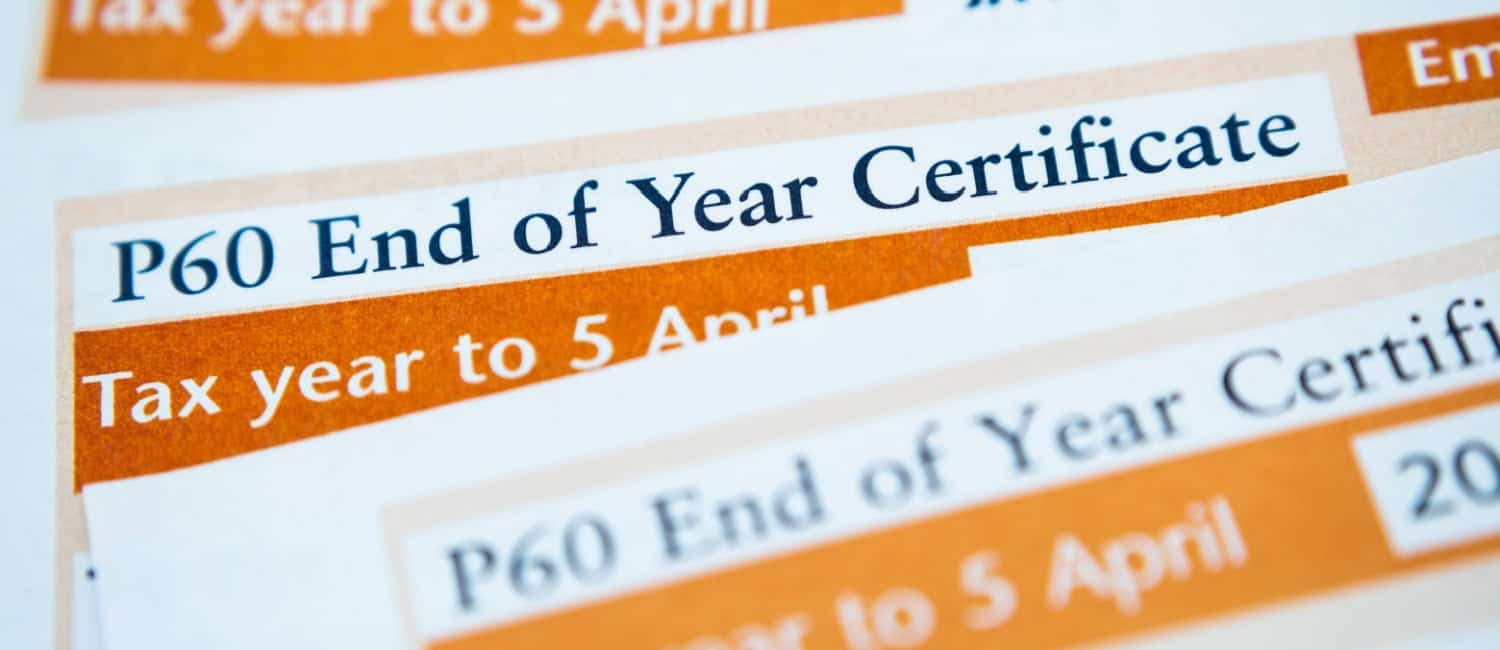
By 31 May 2026, you need to give a P60 to everyone who was on your payroll on the last day of the 2025/26 tax year.
A P60 is a summary of what an employee earned over the year, and the tax deducted from their pay. If you’re a director and you take a salary, you’ll need one too.
July 2026: employee benefits and a payment on account
July was a quieter month, but it had a few deadlines for employers who provide benefits, plus a payment on account for anyone who makes them. If you missed any of them, here’s what to do now.
6 July – report expenses and benefits
If you gave employees taxable benefits in the 2025/26 tax year, like a company car or private medical cover, you needed to report them to HMRC by 6 July 2026. You do this on form P11D, with one for each employee who received benefits. You then send a single P11D(b), which totals the benefits across everyone and works out the extra National Insurance (Class 1A) your business owes on them.
If you missed the deadline, send your forms as soon as you can, as HMRC charges a penalty for each month they’re late.
The process is changing, though. The Budget confirmed that company cars, vans, fuel and medical benefits must go through payroll from 6 April 2027, with most other benefits following from 6 April 2028. You’ll still use P11Ds for the 2026/27 tax year, so there’s nothing new to do yet, but it’s worth getting your payroll ready.
22 July – pay Class 1A National Insurance
The Class 1A National Insurance on those benefits was due by 22 July 2026, or 19 July if you paid by post. If it’s still unpaid, pay it now, as HMRC charges interest from the day after the deadline.
31 July – second payment on account for 2025/26
If you make payments on account, your second payment towards your 2025/26 tax bill was due by 31 July 2026. If you haven’t paid it yet, interest is being added daily, so it’s worth paying now rather than waiting until January.
Your next deadline is 31 January 2027. That’s when your balancing payment for 2025/26 and your first payment on account for 2026/27 are both due. The second payment on account for 2026/27 is then due by 31 July 2027.
October 2026: registration and paper returns
5 October – register for Self Assessment
If you started working for yourself in the 2025/26 tax year, between 6 April 2025 and 5 April 2026, you needed to register for Self Assessment by 5 October 2026. The same deadline applied if you started a partnership, or joined one as a new partner.


If you missed it, register now. It’s quickest online, and you’ll still need to file your return and pay any tax by 31 January 2027.
31 October – the paper Self Assessment deadline
Paper returns for 2025/26 had to reach HMRC by 31 October 2026. If you missed it, you can still file online by 31 January 2027 without a late filing penalty.
28 October 2026: the Autumn Budget
The 2026 Autumn Budget was delivered on 28 October. These are the main changes for small businesses:
- Minimum wage – from 1 April 2027, the National Living Wage for workers aged 21 and over rises from £12.71 to £13.21 an hour. The rate for 18 to 20-year-olds rises to £11.27.
- Payrolling benefits – company cars, vans, fuel and medical benefits must go through payroll from 6 April 2027, and most other benefits from 6 April 2028.
- Business Asset Disposal Relief – the lifetime limit is set to fall from £1 million to £500,000 for disposals on or after 6 April 2027.
- Making Tax Digital – if you’re due to join from April 2027, you won’t get penalty points for late quarterly updates in 2027/28.
- VAT e-invoicing – From 1 April 2029, VAT invoices to other businesses and public bodies will need to be issued as structured e-invoices, not just emailed PDFs, and HMRC has published a roadmap for getting there.
Some of these aren’t law yet, so treat them as planned changes for now.
The quieter months: June, August, September, November and December
There are no headline dates in these months, but a quiet month isn’t empty.
If you’re on Making Tax Digital, two of your quarterly updates fall in this stretch, in August and November. So, depending on your situation, these months may be busier than they look.
They’re also a good time to get ahead. If you file on paper, start pulling your records together in August. If you file online, getting organised in November makes the January deadline much less of a rush.
It’s worth keeping your routine obligations in mind too. If you’re VAT-registered, you generally file your VAT return and pay your bill one month and seven days after the end of each accounting period, through Making Tax Digital-compatible software.
The VAT registration threshold is £90,000 of taxable turnover, measured on a rolling 12-month basis. If your business is growing, keep an eye on that figure, because it’s a threshold you can pass without noticing.
2027 and beyond
April 2026 set the scene for long-term new policies, revisions, and updates that are taking place gradually. It’s worth knowing what’s coming, so none of it takes you by surprise.
- Making Tax Digital widens – the £50,000 income threshold drops to £30,000 from April 2027, and to £20,000 from April 2028. HMRC estimates that around 1.08 million more sole traders and landlords will join from April 2027, with more following from April 2028. If your income is close to either, it’s worth getting ready in advance. If you join in April 2027, you won’t get penalty points for late quarterly updates in 2027/28.
- Payrolling benefits become mandatory in stages – from April 2027, company cars, car fuel, vans, van fuel, and medical benefits must be reported through payroll in real time, rather than on an annual P11D. Most other benefits follow from April 2028. For many employers, this turns a year-end task into an ongoing one.
- Late payment penalties increase – from April 2027, the penalties for paying income tax and VAT late increase. It’s one more reason to keep your payments on time.
 Keeping on top of key dates
2026/27 asks a bit more of small business owners than most years. MTD for sole traders and landlords has changed how they report their income, while April brought a swathe of pay and tax changes in a short space of time.
You might also like
Save the dates that apply to you, use the quieter months to get your records in order, and check anything that affects your own position against GOV.UK.
If you’re just getting started, 1st Formations can register your company at Companies House and help you set everything up properly from day one.
And if you’re already up and running, we can take the routine filings off your hands, from your annual confirmation statement to updating your details when they change. That leaves you free to spend more time on the business, and less on paperwork.





Join The Discussion
Comments (4)
I am running a micro business and want to thank the team for your wonderful content that you produce. Your newsletters, website and videos have become my one stop shop for business guidance and information. Your content is clear, knowledgeable but also very visually appealing which is incredibly useful for people like me who learn visually. Thank you so much First Formations team. You are making a big impact for business owners in the UK
Thank you for your kind comment!
We are so pleased that you enjoy the content that we produce.
It is our goal to be able to provide as much useful information to business owners and we will continue to produce as much content as possible.
Kind regards,
The 1st Formations Team.
Thanks for the article! I will keep these key dates of 2025 in mind for my own business tax services UK.
Hi David,
That sounds like a great idea!
Unfortunately, it is very common for many small businesses to forget these dates.
Kind regards,
The 1st Formations Team.