
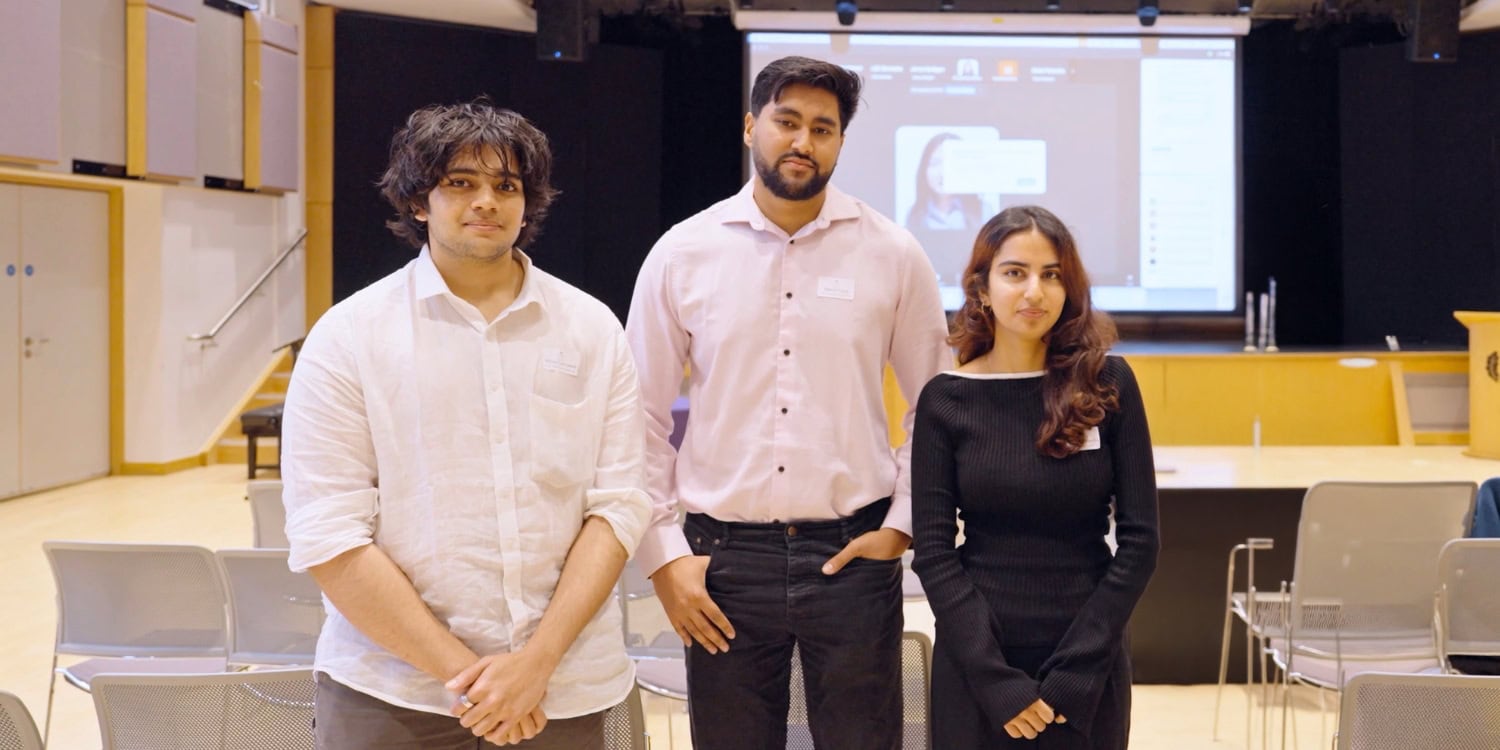

Akrolimb is an early-stage startup developing affordable custom prosthetics using AI-powered scanning, digital design and 3D printing. It aims to help clinics create better-fitting devices more quickly, at much lower cost, and in a way that better responds to what people actually need in everyday life.
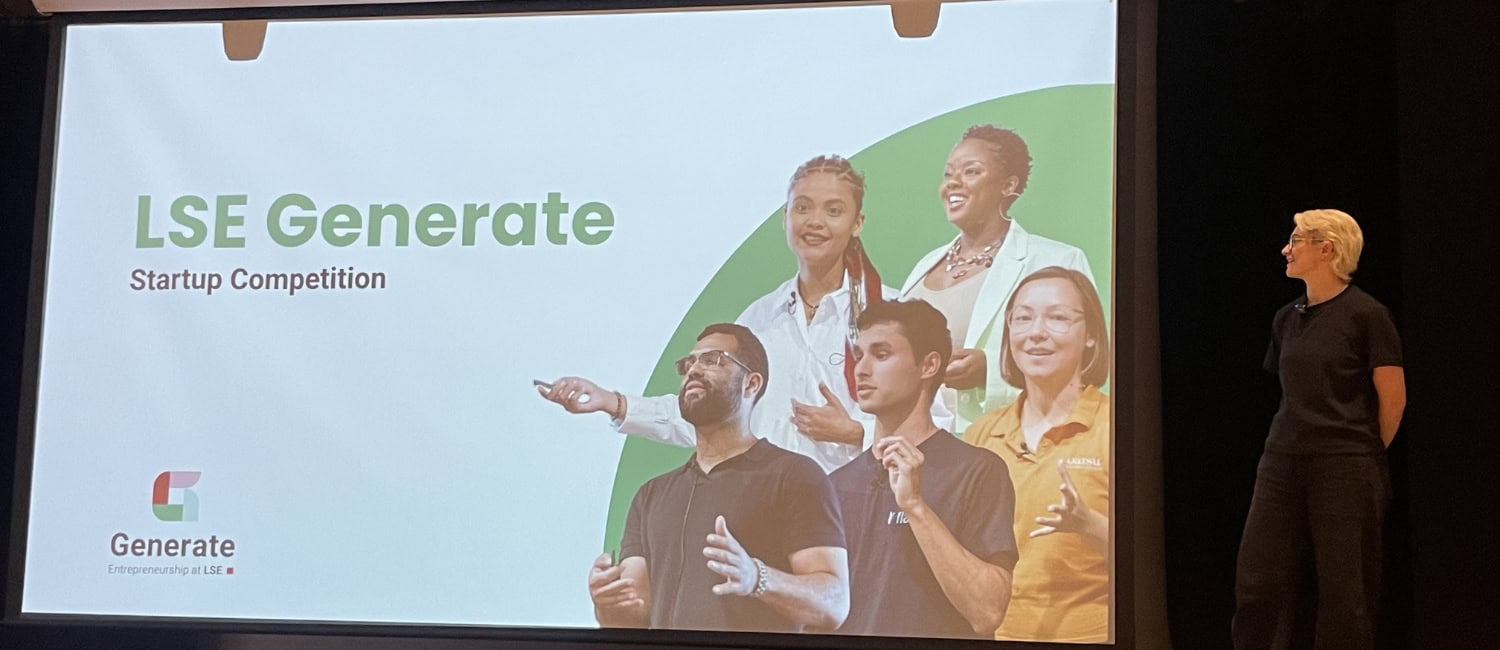
This inclusive-tech startup received prize funding from 1st Formations after taking part in the LSE Startup Competition held in partnership with LSE Generate, the London School of Economics’ entrepreneurship centre.
The competition gives student and alumni founders the chance to pitch their ventures and turn early ideas into tangible outcomes. For Akrolimb, that support helped create real momentum in the early days and gave the team the chance to test their concept in the field.
Namit Garg and Vihan Gemawat are the young co-founders behind that story. When we sat down with them, they spoke warmly about what drew them into the inclusive-tech space, how the funding helped them travel to India and fit seven amputees, and what they learned from seeing their work used in everyday life.
Key takeaways
- Akrolimb used prize funding from 1st Formations and the LSE Generate Startup Competition to travel to India, where they fitted seven below-elbow amputees with custom-designed prosthetics – turning an early-stage concept into real-world evidence.
- The founders discovered that the biggest problem in prosthetics isn’t access to technology – it’s that devices are designed to look like limbs rather than help people do specific things, from holding a spoon to tying their hair.
- A relatively small amount of early funding, combined with mentorship from LSE Generate, helped Akrolimb narrow their focus, prove their concept, and build the foundations for a dual-country operation spanning India and the UK.
Changing daily life for seven amputees in India
Winning prize funding from 1st Formations through the LSE Generate Startup Competition gave Akrolimb the chance to take an important step from product development to real-life testing.
After the competition, we had a good idea of what we wanted to do, and we’d been working with some people over here in the UK to see if it would work, but we hadn’t actually tested our end-to-end system on any patients yet. So, we decided to make a trip to India,” says co-founder Namit Garg. “We reached out to a bunch of clinics and charities, and we were lucky enough to find seven amputees willing to take part.
Over the course of the visit, the team fitted seven below-elbow amputees with prosthetics and began to see the real impact that Akrolimb could have on people.
Designing around real goals, not assumptions
As an early-stage startup, you can spend a long time refining an idea, improving the design, and talking through the theory of how it should work. At some point, though, you need to see what happens when the product meets the intended user.
In Akrolimb’s case, that meant listening closely to what each person wanted help with and designing around that. Co-founder Vihan Gemawat says the team focused on practical goals from the start:
For every amputee we worked with, we took down five goals that they wanted to accomplish, and we really focused on how we could design around that. We wanted to make something that was more than just cosmetic. We focused on the things they wanted to do and built solutions around that.
They met a woman who needed help holding a spoon so she could eat more easily. A triathlete wanted to get back into the gym and try exercises like deadlifting and bicep curls. Another patient needed support with writing. Akrolimb built around those needs rather than assuming every user wanted the same thing.


Comfort as a measure of success
The team had already seen how often uncomfortable devices end up being left in a drawer. A prosthetic can be technically impressive, but if it’s awkward, rigid, or difficult to wear for long periods, it’s unlikely to become part of everyday life.
A lot of upper-limb amputees don’t wear devices, even if they can access them, so we wanted to prove that our solution would have a high acceptance rate,” says Namit. “Since we were using a softer material, we found that a lot of the amputees found it really comfortable and are still using their prosthetic to do everyday things. So that was a big success for us.
The problem: Form over function
For many amputees, access to prosthetics is still limited by high costs, slow production timelines, and limited customisation. Even when devices are available, they don’t always fit comfortably or support the tasks someone wants to do every day. And when that happens, people often stop using them.
That’s something both founders had seen up close before they started building the company. For Namit, the interest in inclusive design goes back to childhood when he was diagnosed with Guillain-Barré syndrome (GBS) and spent time in a wheelchair.
That experience highlighted how our current world is shaped around what we think is normal,” he says. “Ever since then, I’ve been really interested in inclusive design and how we can use our engineering skills to make things that benefit people who actually need them.
For Vihan, the motivation stemmed from what he saw growing up in India. He lived near an amputation centre and was struck by the everyday challenges amputees faced. Later, when he met Namit at university, they found themselves drawn to the same question: how do you build something useful enough to become part of daily life?
A £4,000 prosthetic that couldn’t help with tying hair
That question came into even sharper focus during the India trip. The team met people who had already spent significant amounts on prosthetics that still didn’t solve the problem they cared about most.
Vihan remembers one young woman in particular who had a prosthetic worth around £4,000 but still couldn’t do the one thing she wanted it for: tying up her hair.
That opened our eyes to the fact that what’s wrong is that prosthetics today are not being designed with a function. They’re being designed to appear like a normal limb rather than to help with a certain activity.
It’s a simple point, but an important one. A state-of-the-art, expensive, and life-like prosthetic is pointless if it doesn’t help in practice.
The solution: Custom devices built for comfort
Akrolimb makes custom prosthetics that are quicker to produce, more affordable, and more comfortable to wear. Using AI-powered scanning, digital design, and 3D printing, clinics can create tailored devices faster and at lower cost – without the slow, manual processes that have long defined the industry.
The process itself follows three steps: scan, generate, and print. A clinic captures the shape of the limb, Akrolimb’s software turns that into a custom design, and the final device is then 3D printed. That makes it easier to create something tailored to the individual while also reducing time and cost.
- How to find the perfect co-founder for your startup
- Do you need a business plan to register a company?
- How to get funding for a startup or new business in the UK
How the process works
Namit is clear that the technology is a crucial element of Akrolimb’s model, but it would serve little purpose without user-centred design:
You should always keep the needs of the users at the centre of the design rather than assuming that just adding tech is going to make the solution better.
That way of thinking runs through the whole process. Rather than focusing solely on appearance, the team starts with the person and the tasks they want help with, then designs from there. Just as importantly, the device must be comfortable enough to use every day.
Akrolimb’s software doesn’t replace clinical input. It helps generate a custom design, but clinicians can still refine the final device to fit the individual, adjusting elements such as fit, padding, and cut-outs as needed. That balance between digital speed and human input is central to the startup’s approach.
How the LSE Generate pitch and 1st Formations funding helped
The support from LSE Generate and 1st Formations made a practical difference early on in Akrolimb’s journey. Instead of disappearing into general startup activity, it helped Namit and Vihan build what they needed, travel to India, and properly test the concept.
Putting the prize money to work
Namit explains:
The competition money let us immediately prove our concept in India and fit seven trans-radial patients successfully.
Vihan adds that the prize made the trip possible in a very direct way:
Thanks to the prize that we won, we were able to buy three 3D printers and set up a decent workspace for us to create prosthetics. We used the rest for materials and tools to assemble the products.
That’s often what early-stage funding is supposed to do, but it doesn’t always happen so clearly. In this case, there’s a direct line between the support and the outcome. The prize helped the team build a small production base, test their end-to-end process, fit seven amputees, and gather real feedback.


The value of mentorship and community
The wider support from LSE Generate was just as valuable. The founders describe it as helpful, encouraging, and grounding – giving them access to advice, structure, and conversations that helped sharpen their thinking.
“LSE Generate was amazing,” Namit says. “Having those meetings with the entrepreneur in residence was really useful in making sure that we were staying on track. And when we did the competition and spoke to the judges, that was really insightful for us and gave us a lot of confidence in what we were working towards.”
They also point to the value of hearing from judges and other founders who’d been through the process themselves. One of the most useful pieces of advice, Namit says, was to stop trying to solve everything at once.
When we first started, we were looking at the big picture of prosthetics in general,” he says. “Taking part in the LSE Startup Competition helped us to narrow our focus and see the value of locking down one thing first before you move on to the next. That was key to our success.
What’s next for Akrolimb?
Since the competition, the startup has continued to build momentum. The founders have been accepted into the King’s Trust programme and are building links with clinics and charities in India. They’ve already incorporated in India and plan to incorporate in the UK.
A dual-country strategy
That UK base forms part of the longer-term strategy. Namit and Vihan see India as an important manufacturing and on-the-ground delivery hub, while the UK offers a strong environment for research, development, and future compliance work.
We wanted to keep the UK as our tech base because there’s quite a strong regulatory framework in place here,” Namit says. “And because we’re based in both India and the UK, having the software based here and the manufacturing in India just made a lot of sense for us.
Vihan adds:
From an innovation perspective, the UK proved to be the perfect place for research and development. We found it to be the right place to take that forward.
The road ahead
Over the next 6 to 12 months, Akrolimb plans to focus on UK incorporation, pre-seed funding, partnerships and further validation. The team is also looking closely at orthotics alongside prosthetics.
How you can help Akrolimb keep moving forward
Akrolimb’s story is an example of what can happen when inclusive entrepreneurship gets the backing it needs.
A relatively small amount of funding, combined with mentoring and ecosystem support, helped turn an early-stage idea into something measurable. Seven people received custom prosthetics, the founders gathered real user feedback, and a clearer roadmap began to take shape.
Akrolimb is still early in its journey, which means the right support could have a genuine impact. That could come in the form of funding, partnerships, mentorship or introductions to organisations working in prosthetics, orthotics, manufacturing, regulation or inclusive product development.
If you’d like to play a part in their next chapter, you can connect with Namit and Vihan on LinkedIn or visit the Akrolimb website.
Launching a socially impactful business? We can help
Akrolimb is one of many purpose-driven startups that 1st Formations has had the privilege of supporting. From inclusive tech to social enterprise, we work with founders building businesses that go beyond profit. And we’re proud to play a part in those early steps.
If you’re ready to launch a business with social impact at its core, 1st Formations can help you incorporate quickly, stay compliant, and build on solid foundations from day one. You’ll also join a growing community of entrepreneurs who are using business as a force for good.
Find out how to form your company with 1st Formations, or get in touch with our team to talk through what you need.



Join The Discussion