
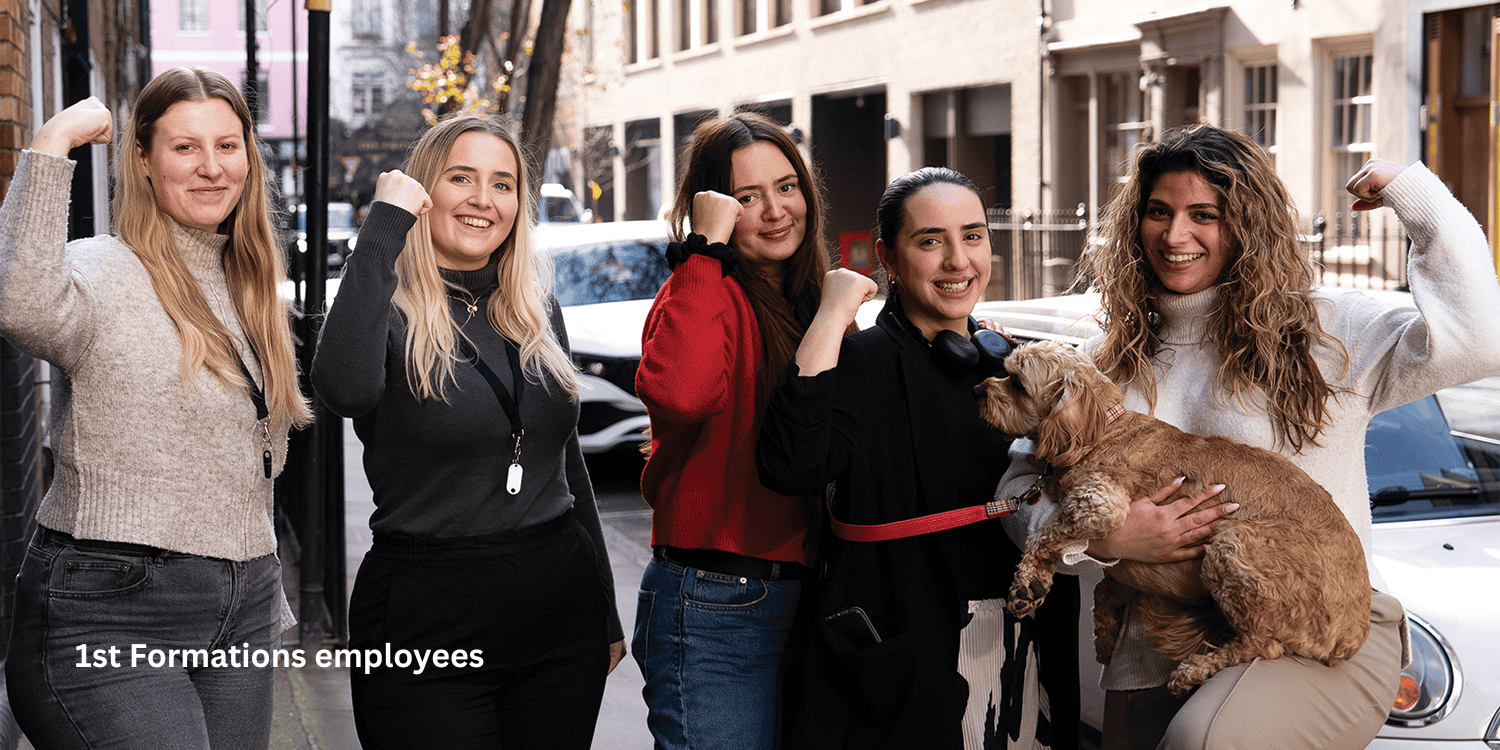


Supporting women’s health in the workplace is a core part of building an inclusive, high-performing, and sustainable business. However, for small and medium-sized enterprises (SMEs), which often operate without an HR team or large budgets, introducing health-related policies may feel overwhelming. Nevertheless, prioritising employee wellbeing and business performance is achievable for many SMEs.
Despite progress in equity, stigma remains around women’s health at work. The UK Meds Workplace Health and Wellbeing Survey 2025 shows that women are 62% more likely than men to feel unsupported at work regarding health-related issues. Also, less than half feel comfortable discussing personal health concerns with colleagues or managers.
Employers who neglect to support women’s health risk harming overall employee morale and engagement, and seeing higher sickness rates and challenges in recruitment.
Introducing policies doesn’t have to be costly. Read on to explore the importance of women’s health in the workplace and discover practical strategies for fostering a safe and inclusive environment for female employees.
Key takeaways
- Only 10% of women feel comfortable discussing menstrual health at work, highlighting the ongoing stigma around the subject.
- Simple, low-cost actions like offering flexible hours or creating wellbeing spaces are examples of supporting women’s health in the workplace.
- SMEs can boost retention and culture by normalising conversations around menopause, fertility, and menstrual health without needing big budgets.
What does women’s health in the workplace mean?
When we talk about women’s health at work, we often refer to the physical, mental, and emotional realities that affect women in their working lives. These include – but are not limited to – menstrual cycles, pregnancy and fertility, peri/menopause, and gynaecological conditions, such as endometriosis and Polycystic Ovary Syndrome (PCOS).
These experiences are not always simply medical. For many women, it can impact mental health, energy levels, self-confidence, and performance at work.
Real stories from real women
What does this look like in daily working life? Bloomful, a UK-based women’s health technology start-up, launched a survey in 2024, inviting women to share how they manage health at work. Here’s how five women responded:
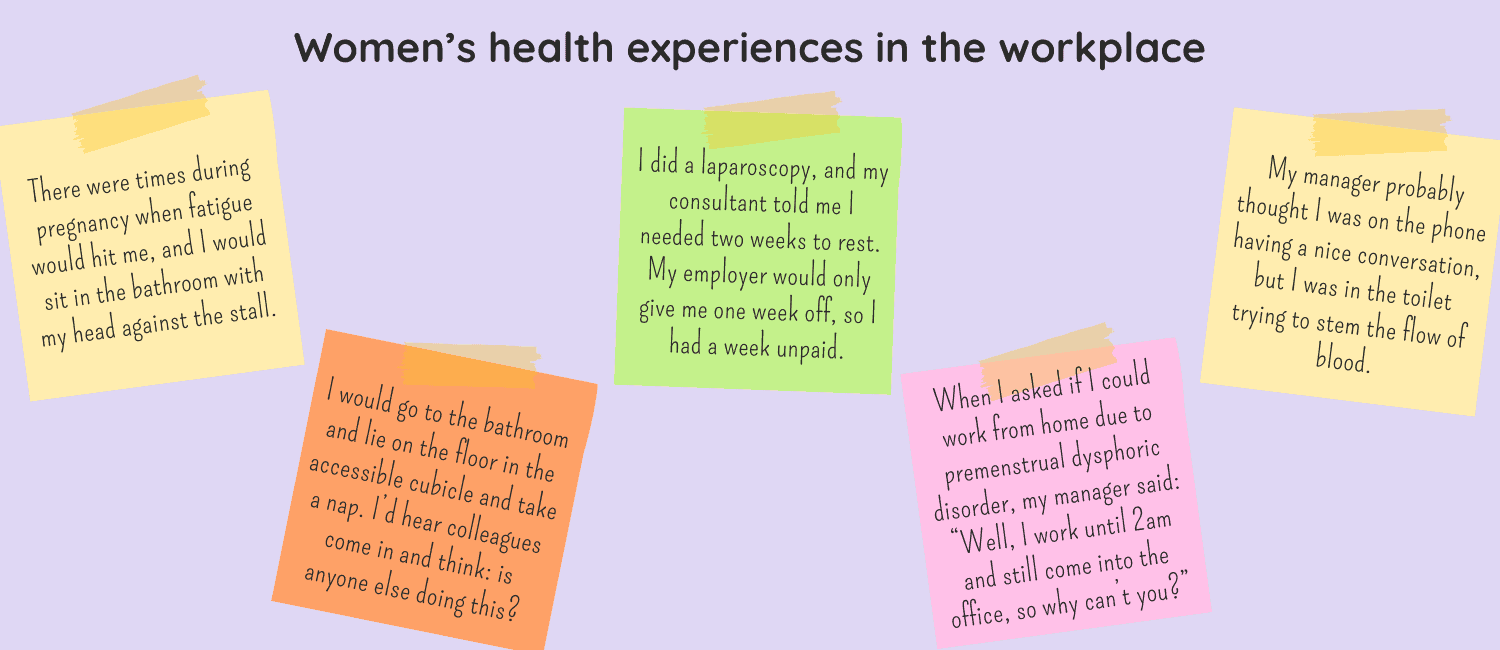
These insights are a wake-up call for many employers and reflect a common theme of struggle, silence, and resilience – something your own employees could be experiencing. They reinforce how often women’s health needs are under-recognised at work, and how much more inclusive businesses could become with greater understanding and support.
How company culture falls short on women’s health
Despite growing awareness, many organisations still treat key women’s health issues as awkward, private, or irrelevant. Workplace norms, leadership behaviours, and unspoken expectations can make women feel unsafe or judged for speaking up.
- International Women’s Day: Supporting women in the community
- Guide to mentoring for women: benefits and importance
- Why we need to challenge the gender gap in entrepreneurship
The UK Meds survey shows that only 10% of women feel comfortable discussing menstrual health at work, highlighting the stigma that continues to surround the subject. This can result in increased stress and anxiety, missed workdays, burnout, reduced productivity, and people leaving their roles entirely.
When we ignore topics like periods, fertility, or menopause, it isolates those experiencing them and negatively impacts drive and loyalty among team members.
It also sends a clear message to the outside world: that such employers overlook the basic needs of their people, making them less attractive to work with, work for, or support.
Why does supporting women’s health at work matter for SMEs?
Business owners need to invest in their people when expanding their team. For SMEs, this is a unique opportunity to dismantle the stigma around women’s health.
Unlike larger organisations, small businesses are agile and close-knit. Leaders are also more accessible, making it easier to influence decision-making and create an open and empathetic working environment.


As more people seek responsible employers, there’s also a magnifying glass on the benefits companies offer besides salaries and the values they lead with. Job seekers look for tangible policies, accessible resources, and leadership that genuinely cares – something SMEs can differentiate themselves with.
By supporting women’s health in the workplace, SMEs can also compete with larger firms for top talent, positioning themselves as an employer of choice.
Graeme Donnelly, CEO and Founder at 1st Formations, expresses why women’s health should matter in all companies and how simple it is to make it a priority:
Supporting women’s health at work should be part of a living and breathing company culture. From menstrual health to menopause, these real-life experiences can affect how women show up at work every day, but they go unspoken. Creating space for these conversations and offering the right support isn’t complicated – it’s good people practice.
6 practical ways SMEs can support women’s health at work
Prioritising women’s health doesn’t have to be costly. Many impactful actions are simple and affordable and start with a mindset shift. Here are 6 actionable steps you can take today:
1. Offer flexible working arrangements
Flexible work patterns can help reduce stress, improve work-life balance, and accommodate women’s physical and emotional needs, making a difference to their engagement and productivity at work. SMEs, even with limited budgets and resources, can implement simple, effective flexible working policies, such as:
- Flexible start and finish times
- Hybrid working or occasional remote workdays
- Compressed hours
- Flex days
- Part-time arrangements
Flexibility signals trust and inclusion, boosting long-term morale and retention. If your industry or business model allows flexible working, it’s worth considering, as it’s one of the most effective and cheapest ways to support women’s health in the workplace.
Mention flexibility in job descriptions so it becomes the standard in your business, rather than an employment perk.
2. Create a designated wellbeing space
Creating a designated wellbeing space can help women manage their physical, mental, and emotional health at work. Access to a quiet and comfortable area offers them a place to recharge or manage symptoms privately, without needing to leave work. It also fosters a more compassionate and inclusive company culture.
Simple, thoughtful office adaptations can go a long way. For example, consider repurposing an unused meeting room into a wellbeing zone. Add a comfortable chair, soft lighting, and basic amenities like a hot water bottle and water fountain.
If your office space is limited or your teams work remotely, create a clear and supportive policy for allowing employees to step away when needed, or book a private room temporarily.
How 1st Formations converted empty meeting rooms into lactation rooms
As a culture-first SME, we wanted to find new ways to support the women using our offices every day. We noticed we had two unused meeting rooms, which we turned into fully furnished lactation rooms.
Stocked with essentials like a mini fridge, comfortable seating, and hygiene equipment, 1st Formations is pleased to offer its female employees, visitors, and clients a safe space to pump at work.
3. Normalise conversations around women’s health
Silence around women’s health creates a sense of taboo, isolating employees who might be struggling with physical or mental health. But you can build a more understanding and supportive workplace by normalising dialogue around these topics. Start the conversation by:
- Hosting informal ‘lunch & learn’ sessions to educate teams on topics like menopause or menstrual health.
- Encouraging managers to check in regularly and express openness about supporting health challenges.
- Celebrating national awareness days (e.g. Menstrual Health Day, World Menopause Day) with internal communications or shared resources.
- Introducing wellbeing 1-2-1 sessions, allowing employees to speak openly with a trusted colleague about their health concerns and ways the business can support them.
Use inclusive, respectful language that encourages genuine conversation, and avoid oversharing or forced disclosure.
How ‘Here We Flo’ spotlights Menstrual Health Day
Need some inspiration? Here’s how organic period products brand, Here We Flo, celebrated Menstrual Health Day 2022 with a simple but impactful Instagram post.
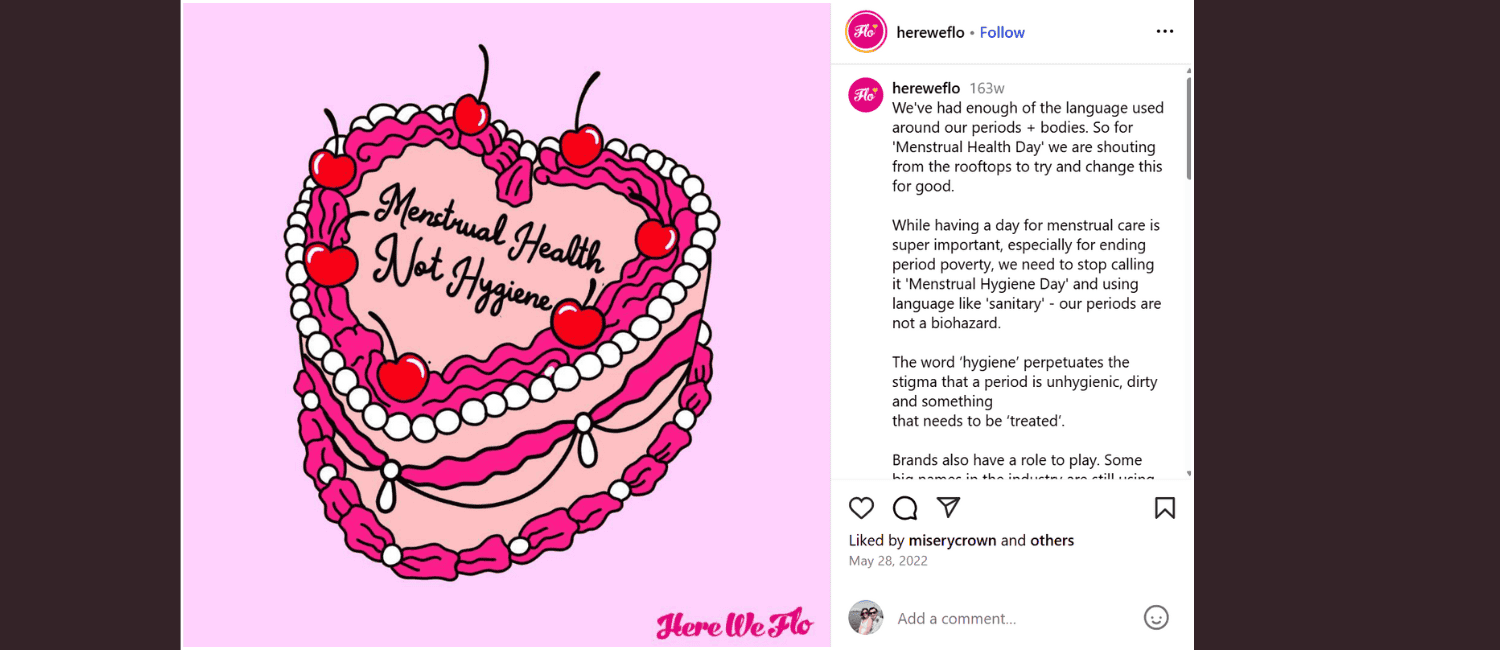
To inspire open conversation around periods, they called out the flawed terminology around menstrual health, saying: “Our periods are not a biohazard” and how words like ‘feminine hygiene’ and ‘sanitary products’ imply that periods are the opposite – unhygienic.
This post highlights how our words and actions need to change, and Here We Flo is instrumental in inviting companies to play their part.
4. Offer external support
If your small business can’t offer in-house therapies or specialist medical support, connect your employees with helpful guidance and resources on women’s health. Affordable options include:
- Peppy offers evidence-backed menopause, fertility, and mental health support for SMEs. Sign up for employees to access private consultations or download their free resources to share with your teams.
- Mind is a mental health charity that offers information booklets, e-learning material, and training to help businesses create safe and healthy working environments.
- Fertifa, a reproductive healthcare benefits platform, offers tailored packages for all business sizes. Employees receive clinical support, educational content, and treatment reimbursements, with pricing tailored to your company’s needs.
- The NHS website contains plenty of free resources and helplines you can share in your staff handbook or internal newsletters.
- Wisdom Wellbeing provides a 24/7 employee assistance programme (EAP) specifically for small businesses.
Signpost these trusted organisations and show your team that their health matters. Even small steps can help build a workplace where women feel informed, supported, and empowered.
No budget? Simply sharing a helpful article or passing on the details of a community group you have come across could make all the difference to someone who needs support.
5. Create menopause and fertility-friendly policies
Menopause and fertility journeys are still some of the most under-supported aspects of women’s health at work. CIPD research shows that menopausal symptoms negatively affect 70% of women. Yet, 80% of UK employers don’t have a menopause policy.
SMEs can close this gap by creating policies that raise awareness around menopause and fertility. These should actively encourage open conversations between managers and staff, and help people access the advice they need. Policies might include:
- Allowing flexible breaks or hybrid working
- Training managers to have informed, respectful conversations
- Allowing paid time off for fertility appointments
- Having a clear, empathetic response protocol for pregnancy loss
- Managing workloads with sensitivity
Don’t have an HR team? You can find plenty of free, expert-crafted policy templates on Fertifa’s website.
6. Offer enhanced leave for women’s health issues
The absence of dedicated women’s health policies often leaves women with limited options when they need time off (typically just annual leave or sick leave). These options are not always appropriate, so employees may work through periods when they need to recover or manage their wellbeing.

Consider offering enhanced leave options that specifically accommodate women’s health needs, such as:
- Time off for neonatal/pregnancy loss
- Dependants’ leave
- Shared parental leave
- Mental health days
Providing this type of flexibility shows commitment to employee welfare, reduces the pressure on women to use their holiday entitlement for health-related matters and reinforces your company as a supportive, mindful employer.
Women’s health tools and resources for SMEs
Here are some practical resources, expert guidance, and SME-friendly tools to help you better support women’s health in the workplace.
Helpful guides and frameworks:
- Acas – Free advice for employers and employees on UK employment laws and best practices on health and wellbeing at work.
- CIPD – Comprehensive guidance on menopause for managers.
- NHS – Understanding the symptoms employees might be experiencing and where to find treatment.
Third-party platforms and partners:
- Peppy – Specialist fertility and parenthood support
- Fertifa – Women’s health benefits
- Mind – Free mental health toolkits
- Wisdom Wellbeing – Round-the-clock mental health support for SMEs
- Henpicked – Menopause in the workplace training
- Endometriosis UK – Employer support guides on endometriosis
Whether drafting your first policy or enhancing existing support, these resources are a strong foundation to build a more diverse workplace.
Take action towards a healthier, more inclusive workplace
Supporting women’s health in the workplace is part of fostering a culture where everyone can perform at their best. And you don’t need a full HR department to start making a difference; change starts with commitment and open conversation.
Looking to make your company a great place to work? Choose one action to implement today. It can be as simple as forwarding a helpful article to a team member or sharing the details of a women’s health support group.
To build a truly people-first business long-term, visit our guide to learn how to create a meaningful company mission, vision, and values.





Join The Discussion