
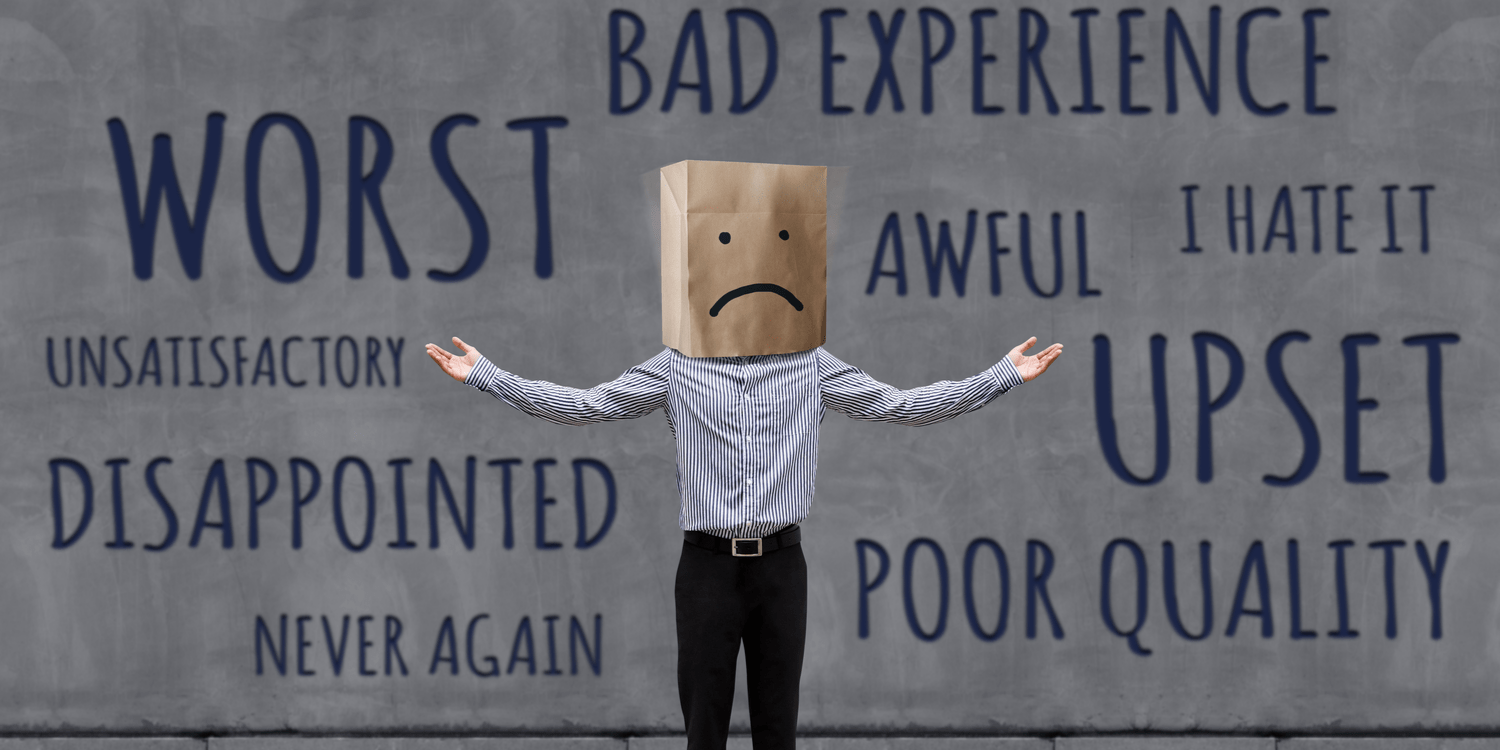


A negative review can be difficult to receive, but how you handle it can shape the wider impression of your business.
A measured reply gives you an opportunity to address the complaint and provide useful context for anyone else reading. This guide explains how to handle bad customer reviews, offering practical response examples and advice for major review platforms.
Key takeaways
- Avoid making assumptions about a complaint, particularly when you don’t have all the facts.
- Remember that prospective customers may read your reply, so consider how your response will appear beyond the immediate complaint.
- Look for patterns in recurring complaints, and only report reviews when you have reason to believe they breach the platform’s rules.
Monitor customer reviews before problems arise
Keeping track of new reviews means you can spot feedback that may need a response. Check where your customers leave reviews and enable notifications where available.
Trustpilot, for example, emails businesses when a new review comes in and lets them filter reviews by star rating in their dashboard. Google Business Profile also sends email and push notifications about new reviews, along with tools to manage and respond to them directly.
For a small business, online reputation management doesn’t need to be complicated – regular checks can be enough to keep track of what customers are saying.
How to respond to negative reviews: a step-by-step guide
When responding to a negative review, focus on five key steps:
- Read the review and check the facts: Establish what happened before responding. If the complaint is long or covers several issues, break out each point separately so nothing gets missed – an unaddressed point could keep the complaint going.
- Respond promptly: Acknowledge the complaint within a reasonable timeframe, even if you still need to investigate.
- Recognise the customer’s experience: Address their concern without automatically accepting unverified claims.
- Take it private, by default: Move substantive resolution to email or phone, whether or not personal details are involved.
- Follow up and learn from the feedback: Close the loop once the issue is resolved. Post a short final response on the public review, acknowledging the resolution or thanking them for working with you, so others can see the issue was addressed.
If you need more time to investigate, a public holding response can acknowledge the complaint without forcing you to reply before you have the facts.
Why negative reviews matter for your business
Prospective customers may read reviews before deciding whether to use your business. When they do, your response provides them with more context on how you handle customer concerns.
Trustpilot’s February 2025 research (2,000 UK consumers and 600+ SMEs) found 83% of consumers are more likely to trust a business when it engages with dissatisfied customers on a review platform and offers a solution.
The findings do not show that responding to reviews leads directly to sales, but they suggest that responses can shape how some consumers view a business.
Amelia French, Director of Operations at 1st Formations, says:
“A negative review can affect how people see your business, but your response matters too. Leaving criticism unanswered means missing the opportunity to show prospective customers how you handle concerns when they arise.”
What not to do when responding to a negative review
Avoid these common mistakes when responding to a negative review:
- Ignoring legitimate criticism: If a complaint warrants a response, leaving it unanswered means your business has not addressed the customer’s concerns.
- Responding while angry: Wait until you can assess the complaint objectively and write a measured reply.
- Trying to win an argument: Correct inaccurate information where necessary, but avoid attacking or embarrassing the reviewer.
- Sharing private information: Keep customer records, personal details, and other sensitive information out of public responses.
- Reporting a review simply because it’s negative: Use reporting tools when you believe content breaches the platform’s rules, not because you disagree with the criticism.
- Withholding an apology: Even if you don’t believe your business is at fault, apologising for the inconvenience costs you nothing and shows potential customers that you’re empathetic to their experience.
Google explicitly advises businesses not to report reviews simply because they dislike or disagree with them. Only reviews that breach its policies are eligible for removal.
How to write a negative review response
A strong response addresses the customer’s specific concern rather than leaning on a generic script. Keep the wording clear, relevant to what happened, and proportionate to the complaint.
Start by apologising for the inconvenience caused. This shows the reviewer, and anyone else reading, that you take their experience seriously. If the complaint is justified, follow this with a more specific apology addressing that issue directly, rather than relying on a generic phrase that doesn’t engage with what actually went wrong. Explain the next step, if there is one, but only promise an action or outcome your business can deliver.
Your response should also sound consistent with your brand voice. The tone may need to be more measured than usual, but it should still feel like it came from your business.
Negative review response templates and examples
These examples can be adapted to suit different complaints. Make sure any response reflects what actually happened and what your business can offer.
1. Holding response while you investigate
Use this when you need more time to establish what happened.
Hi [name]. Thanks for bringing this to our attention. Please accept our apologies for any inconvenience caused.
We’re now looking into what happened and will update you once we have the relevant information.
2. A justified complaint
If your business made a confirmed mistake, acknowledge it directly.
Hi [name]. We’re sorry about what happened. We’ve reviewed the situation and can see that we fell short on this occasion. Please accept our apologies for any inconvenience caused and contact us at [contact details] so we can discuss how to put this right.
3. A customer service complaint
You may need more information before commenting on an interaction involving your team.
Hi [name]. We’re sorry to hear about your experience with our team. Thank you for bringing this to our attention. Please accept our apologies for any inconvenience caused.
We’re now looking into what happened and will update you once we have the relevant information.
4. A delayed order or service
Avoid giving a new timeframe until you can confirm it.
Hi [name]. We understand your frustration with the delay to your [order/service] and we apologise for any inconvenience caused. Please send your reference details to [contact details] so we can check its current status and give you an accurate update.
5. A problem with a product
Give the customer a clear way to discuss the problem privately.
Hi [name]. We’re sorry to hear there’s a problem with your [product]. Please accept our apologies for any inconvenience caused.
Please send your order details and information about the issue to [contact details] so we can look into the options available.
6. A misunderstanding or communication problem
If your communication was unclear, acknowledge it without blaming the customer.
Hi [name]. We can see how the information provided may have caused confusion, and we apologise for any inconvenience caused. We’d like to clarify what applies in your case. Please contact us at [contact details] so we can go through the details with you.
7. A final response after resolving a complaint
A brief public follow-up can close the exchange after you have dealt with the matter privately. Avoid suggesting that the customer is satisfied unless they have confirmed it.
Thanks for speaking with us, [name]. We’ve now followed up with you directly and won’t share the details publicly. We appreciate the opportunity to address your concerns, and we apologise for any inconvenience caused.
8. The customer remains unhappy after the final outcome
Not every complaint will end with the outcome the customer wanted.
Hi [name]. We understand that you remain unhappy with the outcome. We’ve investigated your concerns and explained our position directly. As we’ve completed our review, we don’t have anything further to add publicly. Please accept our apologies for any inconvenience caused.
9. You cannot identify the reviewer or transaction
Ask for more information without assuming that an unrecognised review is fake.
Hi [name]. We haven’t been able to identify the transaction from the information in your review, and we apologise for any inconvenience caused. Please contact us at [contact details] with your reference or booking information so we can look into your concerns.
10. A potentially false or fake review
Stay neutral if you cannot verify the experience described. Whether you report the review should depend on the platform’s rules.
Hi [name]. We’ve checked the information available to us, but haven’t been able to verify this experience. If you have used our business, please contact us at [contact details] with further information so we can investigate. Please accept our apologies for any inconvenience caused.
11. How to respond to a bad review when the customer is wrong
Correct information you can verify without turning the response into an argument.
Hi [name]. We’ve reviewed the details and would like to clarify one point in your review: [brief, verifiable correction]. If you would like to discuss your remaining concerns, please contact us at [contact details]. Please accept our apologies for any inconvenience caused.
12. An unfair but genuine review
If you disagree with the customer’s account, keep your response measured.
Hi [name]. We’re sorry that you were disappointed with your experience. Please accept our apologies for any inconvenience caused.
We’ve reviewed the concerns you raised, although our understanding differs on some points. We’re happy to discuss the matter further at [contact details].
Before publishing any response, make sure it reflects what actually happened. Never claim to have investigated an issue or taken action unless you have done so.
Responding to reviews on Google, Trustpilot, Facebook, and Yelp
Each review platform has its own tools and rules for responding to or reporting reviews:
| Platform | Responding to reviews | Reporting reviews |
|---|---|---|
| Google Business Profile | Verified businesses can reply publicly. Reviewers are notified and can update their review afterwards. | You can report reviews that may breach Google’s content policies. Disagreeing with a review is not grounds for removal. |
| Trustpilot | Businesses can claim their profile, respond to reviews, and receive notifications about new reviews. | Reviews can be flagged for specific guideline breaches. Criticism or an unwanted rating is not enough on its own. |
| Business pages can display customer recommendations and reviews when the feature is enabled. | Content that breaches Meta’s Community Standards can be reported. Turning Recommendations off also removes the Page’s rating and reviews from view. | |
| Yelp | Businesses with a claimed page can respond publicly or send the reviewer a direct message. | Reviews that may breach Yelp’s Content Guidelines can be reported, but removal is not guaranteed. |
Check the relevant platform’s current policy before reporting a review, as the rules differ.


What to do if a review is fake or unfair
It’s important to understand that an unfair review is not necessarily a fake one. A customer may genuinely remember or interpret an experience differently from how your business does.
- Why a professional business address is key to building trust
- What is a brand voice, and why does it matter?
- How to create a website for a new business
If a review contains an inaccurate statement, you can correct it when you have evidence to support your version of events. Keep the correction brief and avoid sharing private customer information. Similarly, being unable to match a reviewer to your records does not prove that their review is false.
Reporting may be appropriate when you have reason to believe a review breaches the platform’s rules. Check the relevant policy first, then submit a report if the content appears to qualify. The platform will decide whether the review should be removed.
Turning negative feedback into a business improvement tool
Once you have dealt with a complaint, consider whether the feedback points to something your business could improve. A single review may reflect an isolated experience, but similar complaints can highlight an issue worth investigating.
Keep a simple record of recurring feedback and share relevant findings with the people responsible. Before changing a process, look into the cause and establish whether the criticism reflects a wider problem.
Customer feedback can also show whether the experience you provide matches how you present your business. Our guide to building a brand for your business explains how your brand extends into customer service and other interactions.
Building a professional business from the start
Customer trust is shaped by more than how you respond to reviews. Clear information about your company and how it operates can help customers know what to expect before they buy from you.
For example, clear terms of service can set expectations around your offering, while a professional business address gives your customers a dedicated channel to raise concerns by post rather than only in public review sections.
If you’re preparing to start a limited company, 1st Formations can help you register your company online and get your business set up.





Join The Discussion