
Key takeaways
- Learn what judges look for in a startup pitch, from a clear problem and memorable message to evidence, commercial thinking, and confident answers.
- Discover five student-founded businesses tackling problems in mental health, drink safety, healthcare, sales, and commodity trading.
- See why you don’t need every answer before taking the first step and registering a company, even if you’re still a student.
On a sunny June evening, Imperial College London’s brightest young entrepreneurs stood before a panel of judges and an enthusiastic audience to pitch their startup ideas at the Imperial Innovation Entrepreneurship & Management MSc Demo Day event, sponsored by 1st Formations. For some, the idea had been a lifetime in the making. For others, a sudden spark of inspiration had set the wheels in motion to solve a problem they couldn’t ignore.
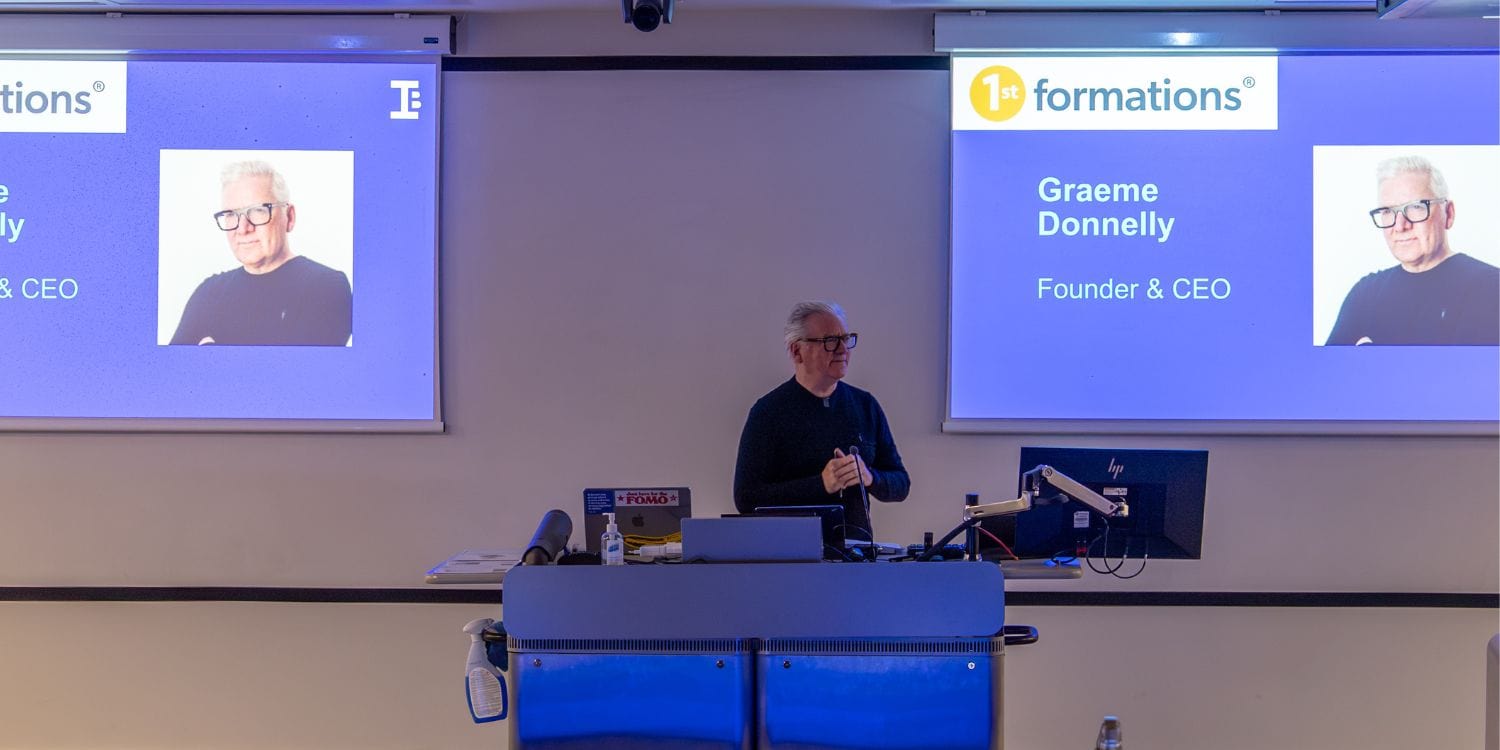
It was a joy to spend the evening at Scale Space, White City, supporting student founders at an event that really embodies the spirit of London Tech Week. Not only was I there as a judge, but I was also asked to share some advice from my journey as an entrepreneur.
Without putting too much of a damper on the palpable buzz in the room, I chose to talk about failure. Not to scare a room full of student entrepreneurs, but to encourage them to face failure with an open mind. To recognise the great work that was done on the road to failure and to identify the small seeds of success scattered amongst the ashes that could, with the right environment and care, grow into a thriving business.
What goes on at a startup pitch contest?
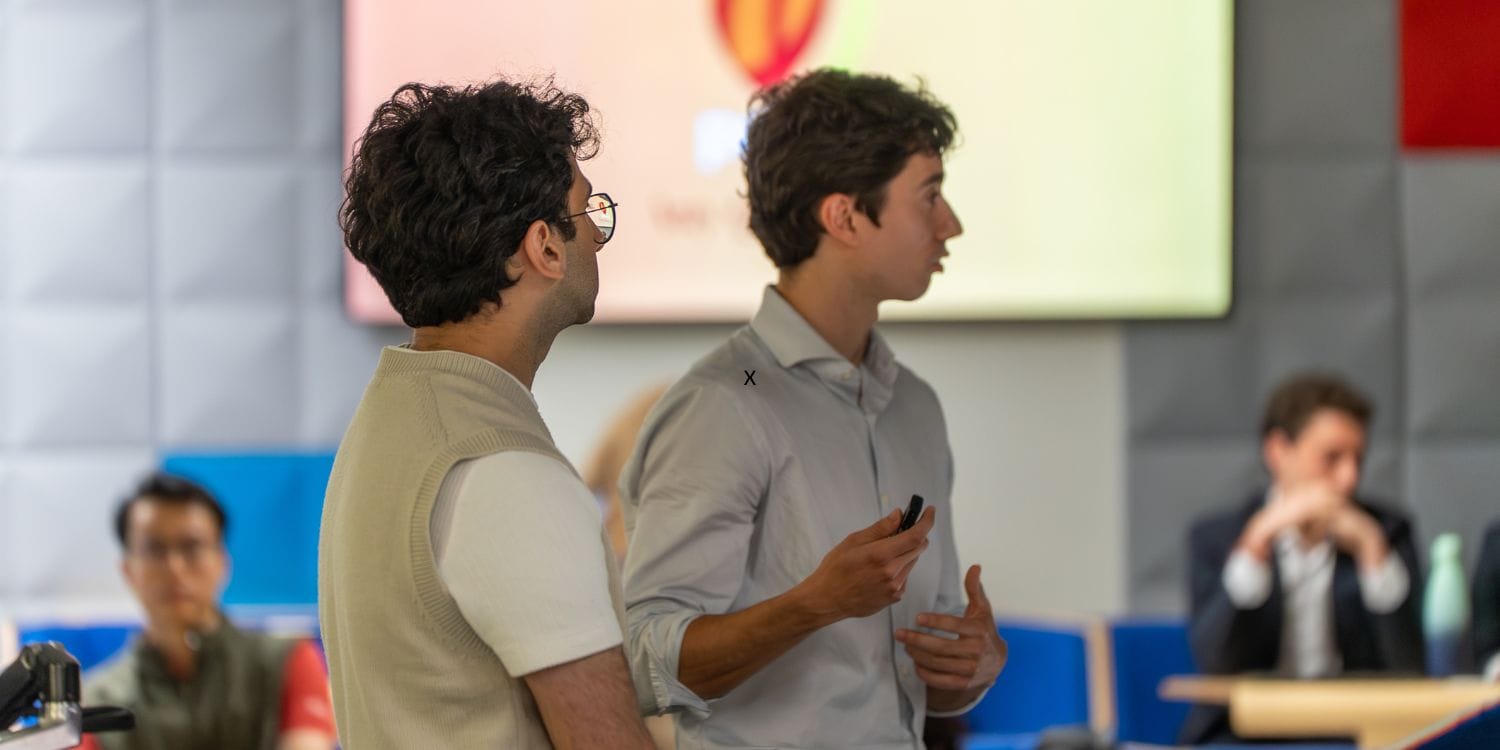
All of the finalists did fantastically well, having progressed through multiple heats just to make it to the Demo Day pitch contest. Each team pitched their startup idea, explaining what it is, who it’s for, and how it fills a gap in the market or stands out against its nearest competitors.
They also outlined their business plan, explained how the startup would generate revenue, and discussed future plans and strategies for scaling their businesses. Each pitch also included ‘the ask’ – support ranging from investment to fund the next stage of development to introductions, referrals and advice to help them on their way. The other judges and I then had a chance to ask a few questions.
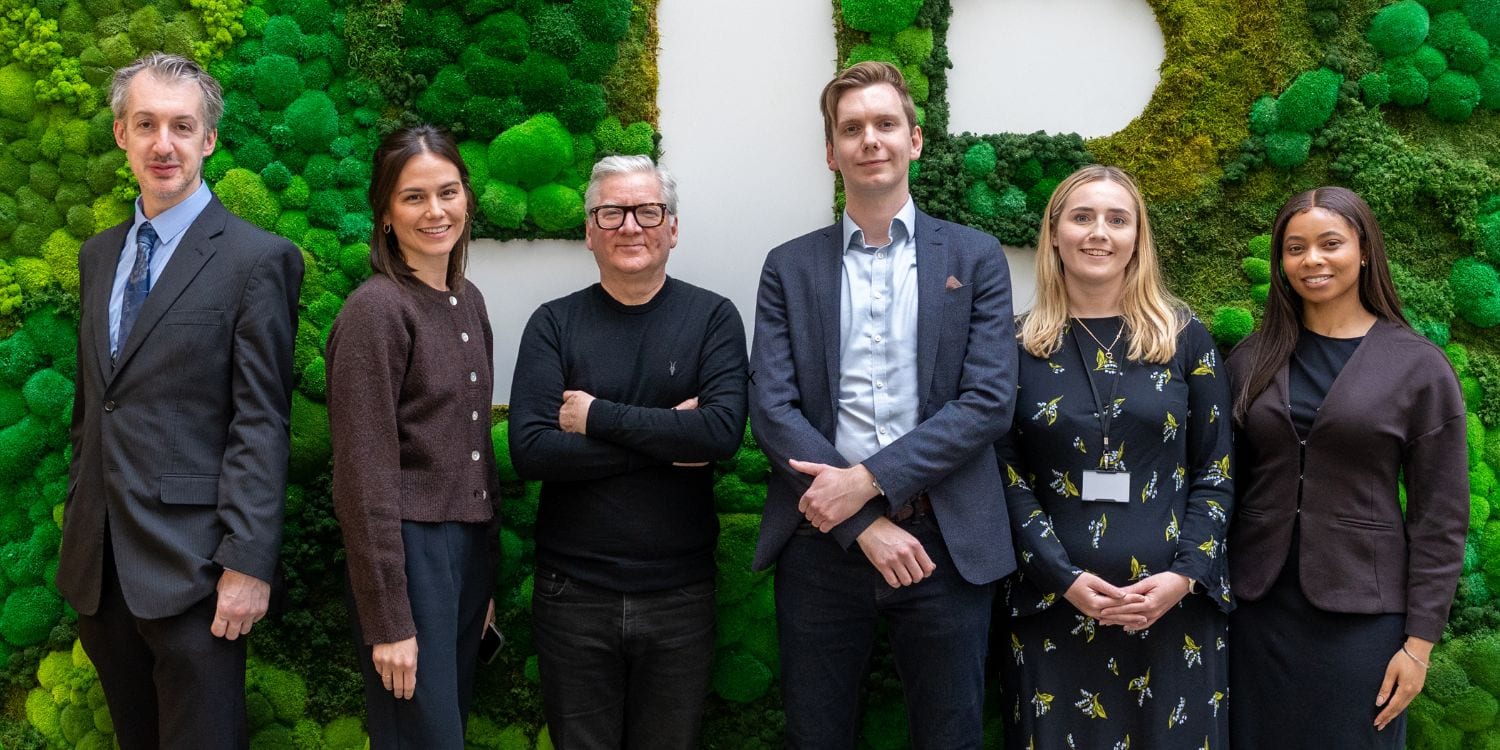
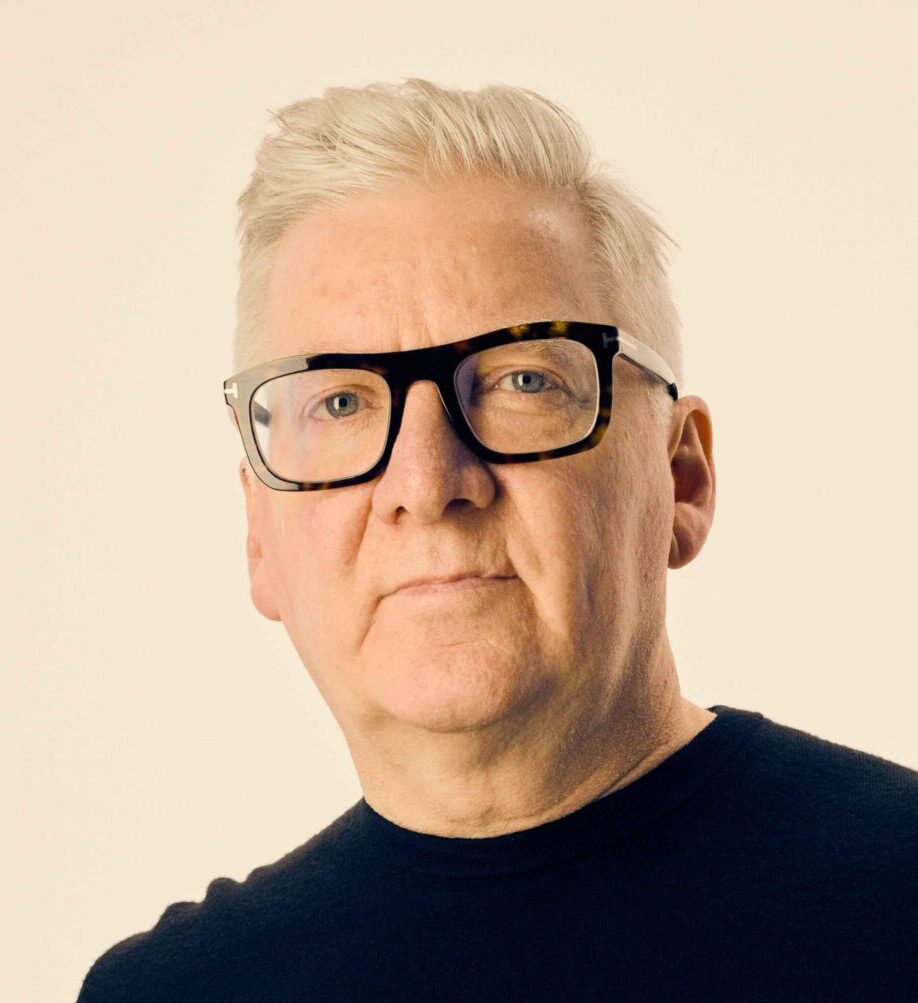
Judging the event, we had myself, Graeme Donnelly, as well as George Singer, Darrell Burberry, Kiki Punian, and Yee Mun T. The Judges’ Winner, which you’ll learn more about below, was Enso, a mental health app that helps users journal feelings, learn emotional expression, and match with therapists based on in-app data. The ‘Crowd Favourite’ selected by the audience was CertiSip, technology built to tackle drink spiking by detecting drugs and contaminants in a drink through its container.
These impressive startups won £1,000 and £500 respectively to fund the next stage of their development. All IEM MSc students – even those not competing on Demo Day – also get free company incorporation and company secretarial services for their first three years through 1st Formations.


Meet the five finalists
It was great to see such a diverse group of startup ideas being pitched, covering a variety of different industries with very different problems to solve. Here’s a look at the five finalists and some highlights from each of their pitches.
Pecan
Founders Rajith Remo and Xabier Fernández pitched their intelligent email platform, Pecan, which automates personalised cold outreach for B2B sales.
Having both worked in B2B sales, they had experienced firsthand the problem of “emails at scale” vs “emails that work” and had grown increasingly frustrated with generic text that was obviously produced by AI. So, they decided to do something about it.
We’ve built Pecan to be the tool we wish everyone had: a way to reach people at scale without losing the sense that someone actually wrote to them.
Here are some key facts and figures from their pitch:
- Rajith and Xabier attended 50 events in the scale-up ecosystem where 61% of the founders and operators they spoke to named outreach as their biggest problem.
- In two pilots run with Imperial College London, Pecan achieved response rates 26x higher than the 1% industry standard.
- While there are competitors in this space, Pecan is the only outreach tool that enables true personalisation and speed at scale.
When asked about predicted revenue, the Pecan team forecast £30,000 in their first year, ramping rapidly to £5 million in year five by capturing just 2% of the B2B scale-up market.
Brave Buddy
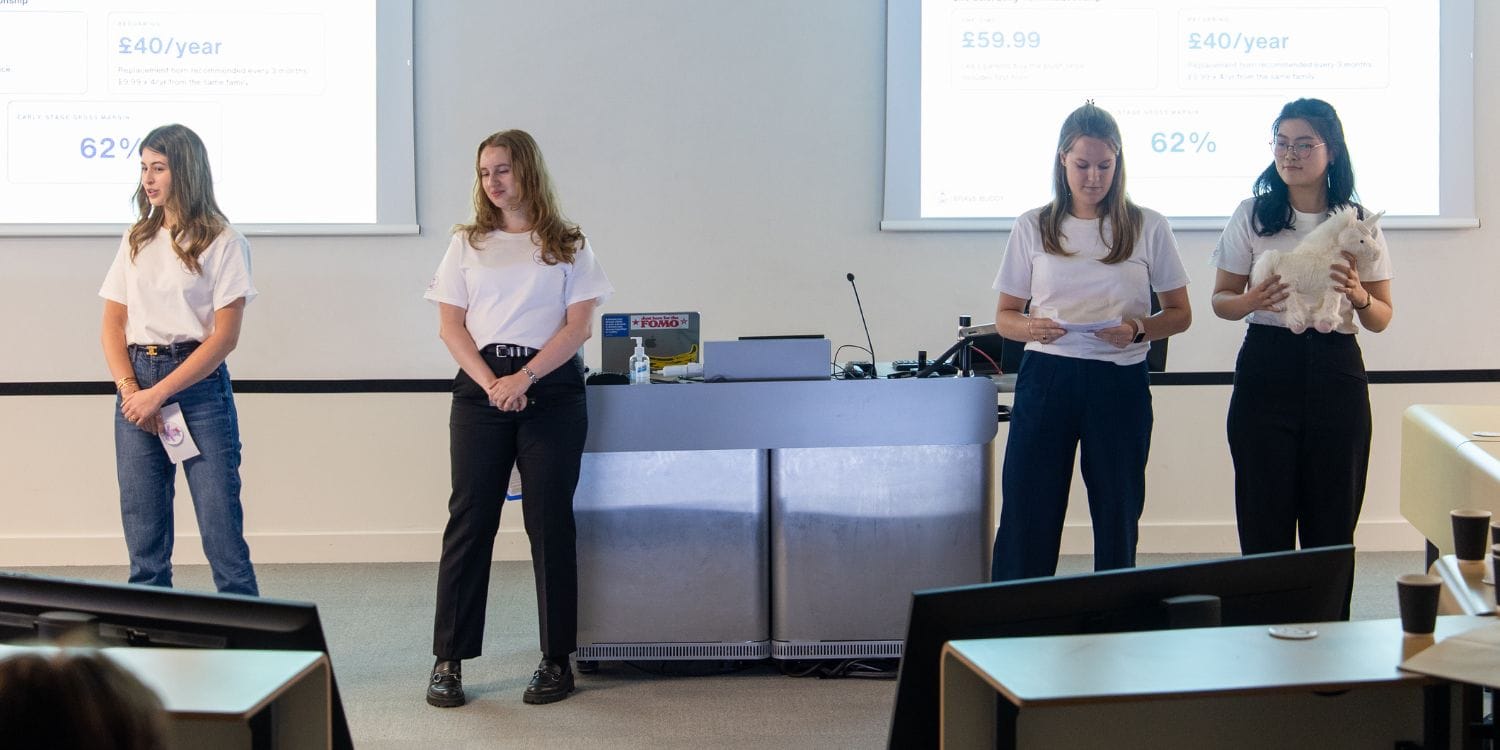
Founders Solenn Sandberg, Romane Peronnet, Belle Yue, and Aya Droubi pitched Brave Buddy: a soft plush toy with a detachable medical-grade silicone horn that delivers a precise dose of oral medicine.
What makes the story behind Brave Buddy so striking is that it began 12 years ago when one of the founders was just 9 years old and hated taking medicine. That childhood idea became the foundation of their Imperial College Business School project.
Every child deserves to be brave. One dose at a time.
A few things that stood out from their pitch:
- The paediatric oral medicine market is worth $182 billion today and is forecast to reach $458 billion by 2034.
- The plush retails at $59.99 with the first horn included, and replacement horns at $9.99 every three months generate £40 in recurring revenue per family.
- They plan to launch on Kickstarter, targeting 1,000 pre-orders, with production starting in month four and delivery to backers by month ten.
One of the other judges asked a pointed question about safety. Could a child get unsupervised access to the medical horn and take more medicine than prescribed? The team explained that only one dose is loaded at a time and that the parent stays present throughout.
TRUST
The TRUST team – Rajaryan Singh, Raina De, and Philip Kaikamdjozov – presented their verified-counterparty platform for global commodity trading. One place to verify counterparties, build a trust score from KYC data and sanctions checks, and onboard new partners in minutes.
The founding story belongs to Raina, whose family had tried to break into commodity trading. They were capable and serious, but the market kept its doors closed because there was no clean way to prove who they were. That experience became the thesis.
You can’t trade if you can’t be trusted, and you can’t be trusted if you can’t put yourself out there. That’s what TRUST exists to fix.
Three things worth knowing about this one:
- They’re launching into refined oil and coal first, where regulatory and reputational stakes are highest.
- The trust score compounds with each verified transaction, making the platform more valuable the more it’s used.
- The initial target customer is the SME trying to enter commodity trading without decades of established relationships behind them.
TRUST was the final pitch of the evening. What stayed with me was the simplicity of the problem statement: in an industry built on trust, there’s no shared infrastructure for establishing it.
CertiSip: Crowd Favourite
Karl Tiefenthaler took to the stage to pitch CertiSip, a non-contact drink-screening device that detects chemical anomalies consistent with spiking agents. Crucially, it scans through the container, meaning the drink itself is never touched or contaminated. With Karl as founder, CertiSip has a multidisciplinary team, including Shradda Vadodaria, Prasad Aradhye, and Terry Huang.
The problem he opened with was stark. 61% of young adults are already going out less because of safety concerns, 83% of women in nightclubs want stronger measures, and 86% of students think venues aren’t doing enough.
A night out shouldn’t come with the fear that one second of turning away could change everything.
Existing solutions put the responsibility on the potential victim, while CertiSip puts it on the venue. A drink is placed on a CertiSip device leased by the venue. It scans and captures the spectrum, then compares it against a drug and drink dataset. Within seconds, a green light means the drink is clear, while a red light indicates tampering and automatically notifies bar staff and police via an app – including the drink type and the suspected spiking agent.
Here’s what made their pitch stand out:
- They’re working with select policing jurisdictions, including the City of London Police, who are providing access to real spiking drug samples to build a proprietary spectral dataset.
- The device is leased to venues at £80 per month, including hardware, software, a certification badge, and an analytics dashboard.
- The European nightlife and hospitality market is worth £100 billion; the UK alone accounts for £30 billion of that.
When I asked about their biggest risk, Karl was direct. It wasn’t the technology, which was progressing faster than expected. The real risk was proving willingness to pay. Their plan is to start with bar chains that have already taken reputational damage from safety incidents, prove the product there, and let the independents follow. A sensible order of operations.
The audience thought so, too, and CertiSip was voted the Crowd Favourite, winning £500.


Enso: Judges’ Winner
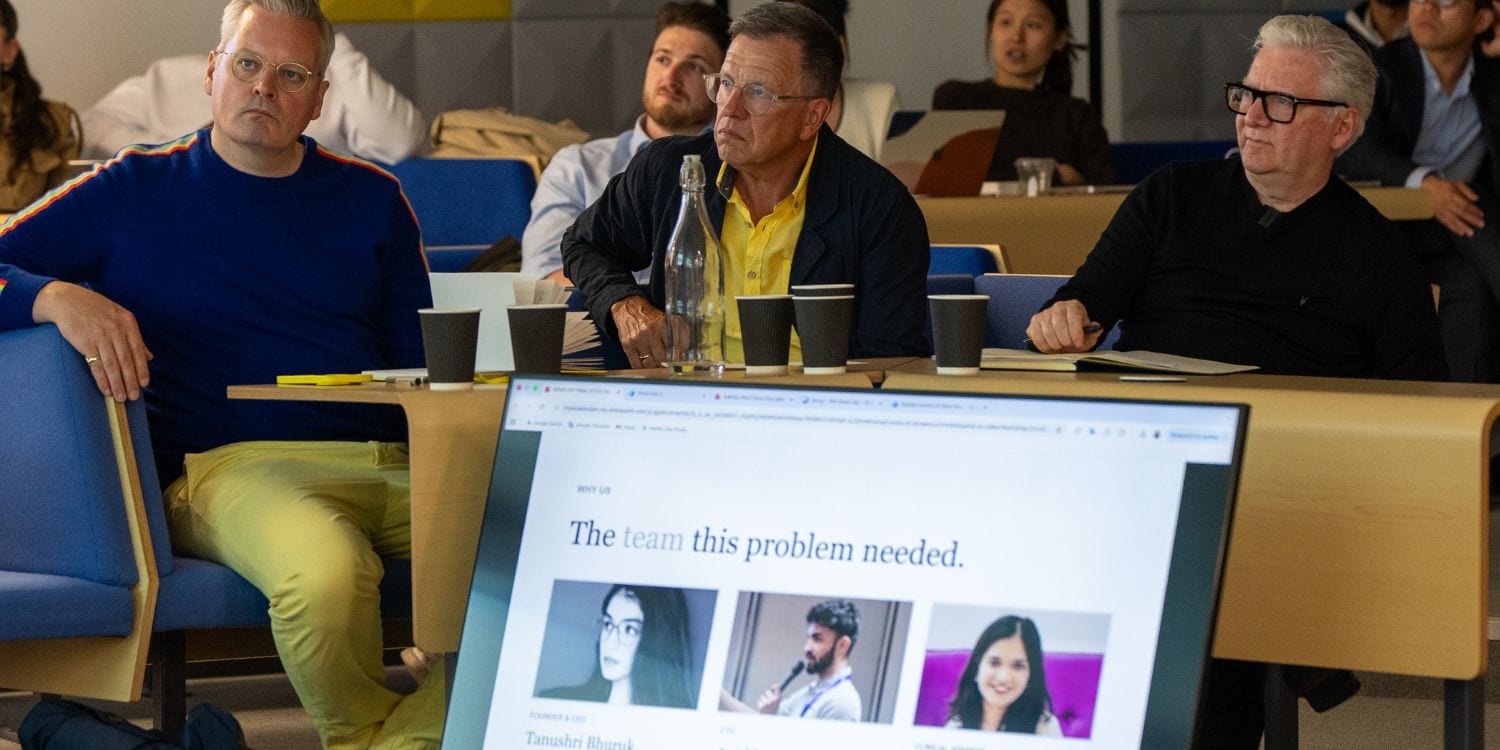
Although Tanushri Bhuruk pitched Enso alone, it was one of the most assured solo pitches I’ve seen. She built Enso with her technical co-founder and CTO Avishkar, and clinical advisor Tanvi, a published researcher in the Journal of Applied Psychology.
Enso is a mental health app, that aims to fill a gap in this growing market. Most wellness apps help you relax. Most therapy platforms assume you already know what’s wrong. Enso sits between the two, helping people understand their own emotional patterns before connecting them with the right therapist when they’re genuinely ready.
The pitch opened with the audience being asked to circle one feeling on a card in front of them. Most people were feeling several things at once and could barely name one. Psychologists call this emotional granularity. Tanushri used it to frame the problem in a way that felt immediate, not abstract.
Then she told us why she built it. She’d moved to London ten months ago, far from family for the first time. She booked a therapy session and spent four nights listing everything she wanted to say. When the day came, the therapist asked how she’d been feeling. She went completely blank. She walked out having spent £80 and said nothing she’d intended to.
It’s not just me and you. One in seven people live with a mental health condition, and 75% of those who access care go blank during their sessions. That night, I knew I had to start working on something.
What caught my attention in the pitch:
- Enso is already live on the App Store with 128 users across five countries, and was selected for Apple’s Small Business Programme.
- Revenue comes from a £3.99 monthly subscription and a therapy marketplace where users pay £15 to £60 per session.
- No user data is used to train outside models, sold to third parties, or stored anywhere other than the user’s own device.
The judges pressed hard on clinical safety. If the app’s AI gave someone harmful advice, what was the liability? Tanushri explained that every prompt used to generate feedback and weekly summaries is reviewed by Tanvi before it goes anywhere near a user.
I asked her what outcome someone genuinely struggling could expect. She answered with her own experience of dealing with minor depression. Using Enso helped her express her feelings with greater precision, which, in itself, reduced the intensity of what she was going through.
What made the winners stand out
There was very little separating the five finalists on the night. All of them had done the work, and all of them believed in what they were building. But watching Tanushri (Enso) and Karl (CertiSip) pitch, it was clear that both had thought carefully about their businesses and about how to communicate them.
Having sat on the other side of the table many times and having pitched my own ideas over the years, a few things stood out.
The problem came first
Tanushri opened Enso’s pitch by asking us to reflect on our own feelings. She hadn’t mentioned the app yet, but she’d already made the problem feel personal. By the time she described going blank in her own first therapy session, the room understood exactly what Enso was built for and why she was the person to build it.
Karl from CertiSip did something similar. Before a single slide about spectroscopy or machine learning, he asked us to imagine turning away from a drink for a moment and coming back, unsure whether it was safe. He opened with a scenario most people in the room had experienced, then showed that millions of others had too, with statistics from a credible source.
The best pitches lead with the problem in plain language: a clear explanation of the problem and who it’s having an impact on. Crucially, you’ve got to make your audience care about the problem, or they won’t be interested in the solution.
A few key points, clearly made
Five minutes isn’t a long time, so both Tanushri (Enso) and Karl (CertiSip) had to resist the temptation to say everything.
Enso’s pitch moved cleanly from the problem to the product to the evidence to the ask. CertiSip’s core mechanism was explained in a single sentence: It was simple enough to repeat to someone who wasn’t in the room – and for the judges to remember with ease.
When you’ve spent months or years building something, it’s difficult to leave things out. But a pitch is an invitation to a longer conversation, and the goal is to leave the audience with two or three things they’ll remember when that conversation happens.
Evidence that the idea was working
One of the first things I look for as a judge is evidence that the team has tested their assumptions in the real world, and both winners had plenty of it.
Enso was live on the App Store and had moved to a paid model three days before Demo Day. CertiSip had detected paracetamol in 40% ethanol with 100% accuracy just two days before the event, a result that showed the science was working rather than merely theorised. Both teams had also spoken at length to the people they were building for, and that groundwork showed in every answer they gave.
A clear business model and understanding of the market
As a judge, I want to know that a founder understands how their business will actually make money and who they’re selling to. Nobody expects a student founder to have every answer, but the thinking needs to be there.
Tanushri (Enso) knew the mental health app market was worth $8.6 billion today and had a clearly defined revenue model: a monthly subscription and a therapy marketplace where both users and therapists pay a fee. Karl (CertiSip) knew the UK hospitality market was worth £30 billion and planned to start with larger operators, validating CertiSip across multiple venues and building its dataset before approaching independents. Neither of them was guessing.
Judges (and potential investors) will always ask about your market and your numbers, so you have to make sure you can answer those questions confidently – even better if you can do it without having to look at your slides.
Honest, confident answers under pressure
The Q&A is where a pitch is really won or lost. A polished five minutes tells you what a founder wants you to know, but the questions reveal what they actually understand.
When I asked Karl about CertiSip’s biggest risk, he said it was proving willingness to pay, which was the right answer, honestly given. When Tanushri (Enso) was pressed on clinical safety and liability, she explained the safeguards around the app’s prompts and Tanvi’s (Enso’s clinical advisor) role without hesitation. Both of them knew their businesses well enough that a difficult question felt like a conversation.
Neither founder suggested that every obstacle had been overcome, and I think that worked in their favour. They showed that they understood the customer, the commercial opportunity and the risks that still lay ahead.
Take the first step, even if you don’t feel ready
If I were to give one piece of advice to aspiring founders like the ICL students who pitched at Demo Day, it’s this:
You don’t need all the answers on day one, you just need the confidence to find them.
Have belief in yourself, keep learning, and keep moving forward. You won’t always feel ready, you won’t always be the smartest person in the room, but if you find that belief when it counts, you’ll give yourself a chance.
When I started 1st Formations, I had no formal training in company formation, websites, or SEO. But I believed I could do this. And now I can proudly say that the company I founded has helped over a million people form companies of their own.
As a business, we are truly passionate about entrepreneurship and genuinely committed to helping the next generation of entrepreneurs. Since 2015, we’ve provided 47 scholarships to entrepreneurial university students across the UK and the USA, and sponsored a number of events like the Imperial College IEM MSc Demo Day in support of student founders.
The path rarely goes where you expect, but if you keep going, you’ll find where you’re meant to end up. Register your company to take the first step.





Join The Discussion