
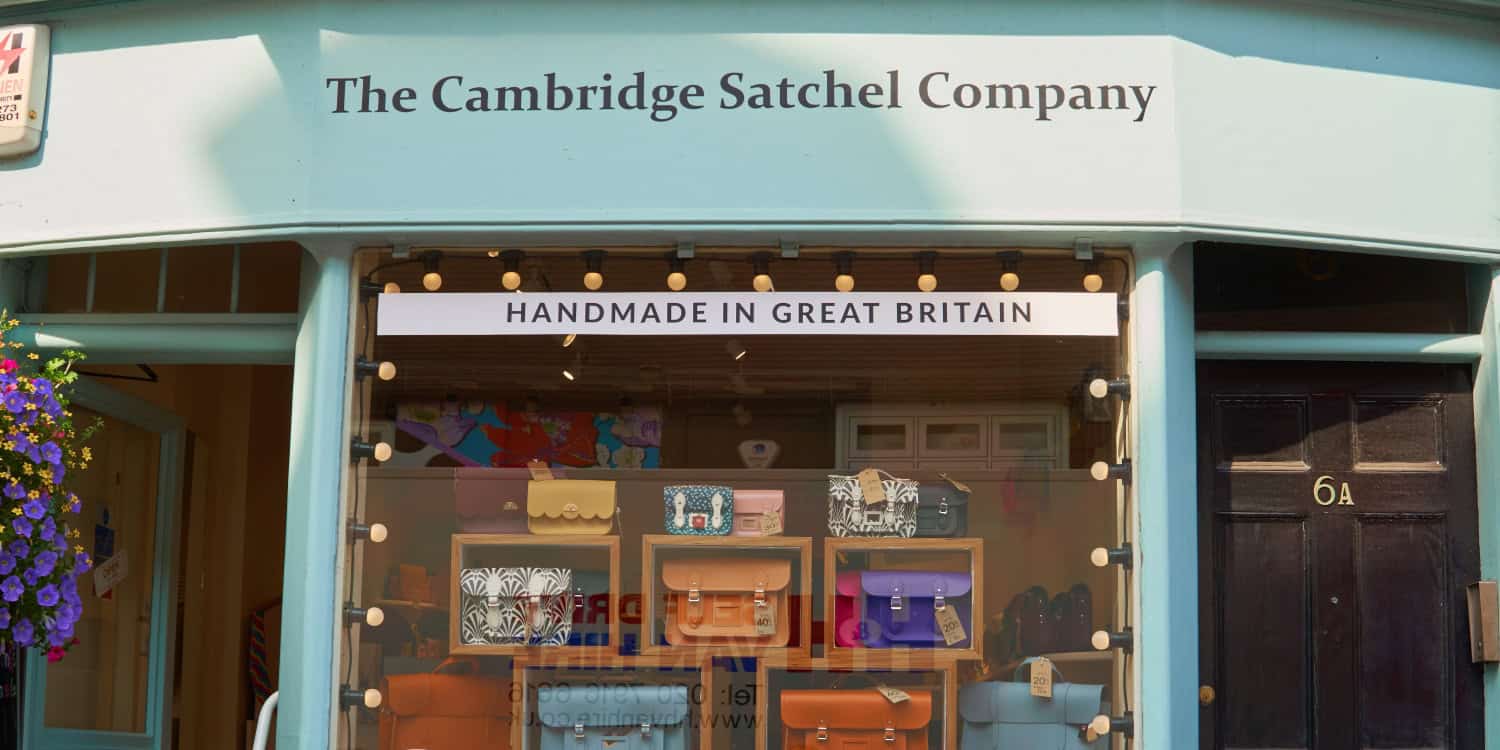

The idea for a new business can strike at any moment. For Julie Deane, her success story took off at her kitchen table with £600 and a mission: to make a better life for her children. In 2008, she founded The Cambridge Satchel Company, reimagining a traditional British schoolbag as a bold fashion staple.
Her handcrafted leather satchels quickly won over celebrities, designers, and fashion enthusiasts. Before long, The Cambridge Satchel Company grew into a multi-million-pound company, reaching customers in more than 120 countries.
Let’s discover how Julie Deane transformed her personal mission into an international brand through entrepreneurial grit and inspired creativity.
Key takeaways
- Julie Deane’s clear motivation to fund her children’s education gave her focus and resilience and has shaped an authentic brand story that connects with customers worldwide.
- Her guerrilla marketing tactics (blogger outreach, influencer gifting, and press engagement) show how creativity and persistence can outperform expensive advertising.
- When counterfeiters and copycats emerged, Deane protected her business by moving production in-house and enforcing trademarks to defend quality and brand integrity.
Determination meets inspiration
The idea for The Cambridge Satchel Company arose when Julie Deane, then a stay-at-home mum, wanted to afford to send her children to a better school. Speaking to Forbes, Deane describes her thought process:
I made a list of ten things I could do to cover the school fees, ten business ideas and ranked them on variables such as startup money, cash flow and continuity.
Unimpressed by common schoolbags and inspired by her own long-lasting leather satchel, Deane reinvented the classic bag with high-quality, sustainably sourced leather in a range of bold designs.
She continues, “I cracked on with each task in an efficient and logical way. There was no lightbulb moment; this was about hard work and analytical reasoning with loads of passion to keep the energy and drive. I created the name and logo in under an hour. When you are on a mission, there’s no time for dithering.”
Deane’s determination became her greatest asset. She started small, moved quickly, and learned as the business progressed. This pragmatic approach and a clear sense of purpose set the tone for a company that grew from a kitchen-table project into an international brand.
Turning a niche into worldwide appeal
After securing a manufacturer, Deane built a website and read books on guerrilla marketing, a low-cost strategy that uses surprise and creative tactics to grab attention and create buzz. She then began reaching out directly to the fashion press.
Deane wrote hundreds of emails to editors and bloggers, who finally started noticing her bold designs and became the brand’s first champions. She partnered with them for giveaways, gifted satchels to tastemakers, and nurtured relationships with her influencers, long before influencer marketing was mainstream.
- The top 10 businesses to start
- 7 tips for managing money when starting up a business
- 10 marketing strategies for small businesses
According to Vanity Fair, a turning point came when Deane called singer Sophie Ellis-Bextor to thank her for an order and asked if she would share her purchase. Ellis-Bextor agreed, and her endorsement, followed by press photos of Alexa Chung carrying a navy satchel, transformed the bags into a fashion must-have.
Momentum gathered quickly. A feature in The Guardian’s 2009 Christmas gift guide unleashed a wave of orders, proving demand for the bags stretched far beyond schoolchildren. In 2010, the Fluoro Satchel collection made its mark at London Fashion Week, and a collaboration with Japanese label Comme des Garçons soon followed – catapulting the brand onto the international stage.
This stage of growth highlights how creativity, persistence, and strategic visibility can turn a niche idea into an international phenomenon. For entrepreneurs, it’s a reminder that bold outreach, whether to bloggers, customers, or collaborators, can be the spark that accelerates a brand from obscurity to recognition.
Overcoming business challenges
Despite the company’s early momentum, Deane encountered serious obstacles. The manufacturer she had relied upon attempted to copy her designs, and counterfeiters flooded the market. At one point, more than 300 fake websites and social accounts were pushing imitation satchels. These threats had the potential to undermine everything she had built.
Instead of allowing the situation to derail her progress, Deane acted decisively. In 2011, she established her own workshop, giving her direct control over production and quality. She also tightened protections around her intellectual property, requiring partners to sign non-disclosure agreements (NDAs), shutting down counterfeit operations, and successfully defending her trademarks.


Deane’s difficulties reflect a vital lesson for business owners: growth often invites competition and imitation, but protecting your product is just as important as creating it. By taking legal action and implementing stricter business practices, Deane turned her challenges into an opportunity to strengthen the business and reinforce its identity.
Scaling to national success
The Cambridge Satchel Company’s commercial success grew alongside public recognition. In just a few years, it scaled from producing three bags a week to 3,000. By 2013, the company had generated £13 million in sales. The following year, it was making 500 bags a day. With British craftsmanship still at its core, it went from home-based orders to large-scale production.
In 2012, Google featured the brand in its “The Web Is What You Make of It” advertising campaign, reaching an audience of 6 million viewers and boosting its profile. The following year, the company earned the Queen’s Award for Enterprise, the UK’s most prestigious business honour.
More recently, The Cambridge Satchel Company has embraced playful and creative collaborations, teaming up with Hello Kitty for a whimsical collection and the Wicked movie for a limited-edition line inspired by the hit musical’s big-screen adaptation. These partnerships reflect the brand’s ability to stay culturally relevant while remaining true to its heritage.
Key lessons for entrepreneurs from Julie Deane’s story
The Cambridge Satchel Company is an inspiring success story, and Julie Deane’s journey highlights five lessons that every entrepreneur can adapt to their business journey:
1. Begin with a clear motivation
Deane’s “why” was simple: paying her children’s school fees. That sense of purpose kept her focused through challenges and became a core part of her brand’s narrative. For small businesses, having a personal and authentic motivation makes it easier to tell your story, connect with customers, and stay resilient in the face of obstacles.
Practical tip: Write down your business mission statement in one sentence and use it to guide decisions, from marketing to customer service.
2. Simplify, then scale
Rather than overcomplicating her launch, Deane focused on a single product and perfected it. After establishing demand, she expanded her offering into fluorescent colours, brand collaborations, and luxury lines. Entrepreneurs often make the mistake of spreading themselves too thin at the start.


Practical tip: Start with a minimum viable product (MVP) and validate interest before broadening your range. For example, create a simple landing page to showcase your product and collect sign-ups. Run a small-budget paid ad test on Facebook, Instagram, or TikTok. Then, measure click-throughs or pre-orders on a minimum viable site like Shopify.
3. Harness low-cost marketing
Deane couldn’t afford big ad campaigns, so she turned to guerrilla tactics. This involved emailing bloggers, engaging fashion editors, and building relationships with famous faces. Her grassroots efforts built authentic buzz and positioned the brand in front of influential audiences.
Practical tip: Partner with micro-influencers (under 20k followers) for higher engagement rates. Or build contacts with journalists and bloggers in your niche. Platforms like Brandwatch can help you connect with the right influencers for your brand.
4. Protect your brand
Deane didn’t back down when faced with counterfeiters and even a factory that tried to copy her designs. She moved production in-house, enforced trademarks, and used NDAs with suppliers. Protecting intellectual property can feel daunting, but it’s critical to long-term success.
Practical tip: Register your business trademarks early, explore cost-effective legal tools like template NDAs or IP audits from the UK Intellectual Property Office, and document all design files for legal proof.
5. Stay adaptable and relevant
The Cambridge Satchel Company has merged timely opportunities with its enduring heritage. This is evident in its collaborations with Comme des Garçons and playful partnerships with Hello Kitty and the Wicked movie. The company’s adaptability is what keeps it relevant and appealing across diverse markets and audiences.
Practical tip: Look for creative collaborations or seasonal campaigns that align with your product or values. Consider partnering with a local artist or running a themed product line around a cultural moment to reach new communities.
Deane has continued to speak about founding The Cambridge Satchel Company. She also shares tips and advice with entrepreneurs on topics such as building a community around your business. Take a look below:
No Title
Let’s Talk About’ is our series of videos offering practical digital skills advice to help you grow. Julie Deane OBE is the founder and CEO of Cambridge Satchel Company. Julie started the business in 2008 with £600.
Inspired by The Cambridge Satchel Company? Start your journey
Julie Deane’s success story demonstrates how resourceful marketing and unique creativity can turn a small business into a global brand. Motivated to start your own venture? Register your business with 1st Formations and get the startup essentials you need to build on your big idea today.
For more inspiring business breakthroughs, why not take a look at 10 great businesses with humble beginnings?





Join The Discussion