
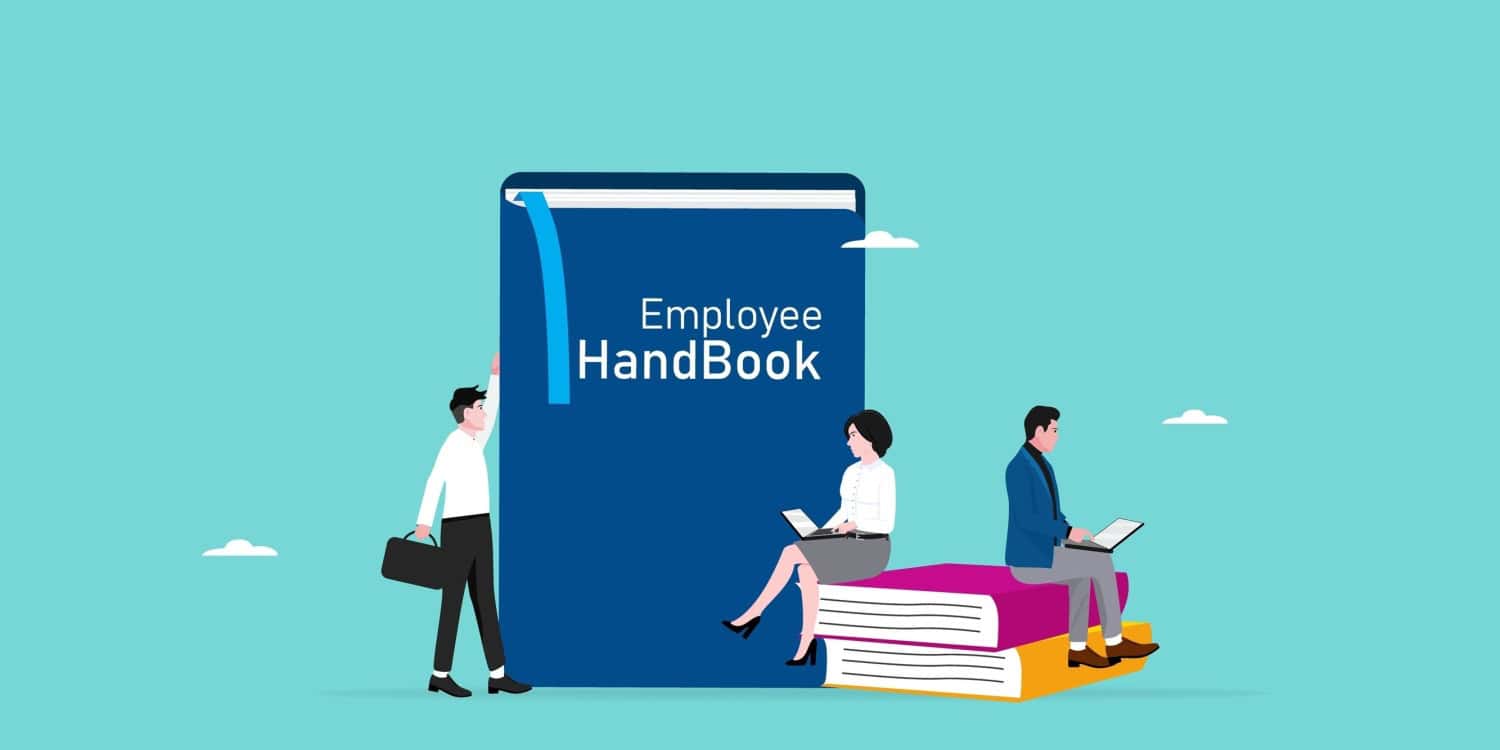


You’d be forgiven for assuming that an employee handbook is a nice-to-have from the HR world, and not something that’ll drive your startup forward. The truth? There’s a lot to be said for a well-written handbook. Although adaptable and dynamic, startups can struggle with company cohesion without a written record of company policies.
With a simple handbook, your team knows how things are done in your business, new starters get up to speed fast, and HR hiccups or misunderstandings are minimised. Your handbook is a practical guide that builds team cohesion and keeps your culture consistent as you grow.
The key is making your handbook easy to access, scannable, and clearly aligned with how you want your team to work. That way, it becomes a valuable resource from day one and remains relevant as your company grows. In this guide, we’ll explore what documents should go into your employee handbook, how to put it together, and tips for updating and improving it.
Key takeaways
- An employee handbook clarifies work policies, procedures, and expectations within your business.
- Effective handbooks cover both compliance essentials and culture-building elements, giving new hires what they need to succeed.
- Keep your handbook regularly updated so that it stays relevant as your team grows and business processes evolve.
What an employee handbook is (and isn’t)
An employee handbook is a written document that puts your company’s key policies and values in one place for easy access. It sets out what employees and business owners can expect from each other regarding staff conduct, communication norms, and workplace policies.
While handbooks can include some legally required documents, they are not the same as employment contracts. Instead, they are more of a practical, go-to guide for everyday working life.
Your handbook sets the tone for your workplace, from your first steps to your 100th hire. It generally includes your company’s mission statement and backstory, core workplace policies (disciplinary, grievance), and then culture-driven sections to help employees feel connected to the business.
How your employee handbook fits into your HR framework
Your employee handbook should be one piece of your HR toolkit, sitting alongside:
- Employment contracts – Legal agreements with each employee
- Offer letters – High-level summaries of roles and terms
- Onboarding packs – First day and first-week resources
How your handbook supports UK legal compliance and culture-building
An employee handbook is not a legal requirement for UK businesses, and doesn’t fall within certain written statements required for employees, such as employment contracts and dated payslips. These are personalised documents. In contrast, your handbook covers all the non-contractual guidance your staff needs.


A transparent employee handbook will ensure company-wide processes are applied consistently and will answer common questions – who, for example, approves holiday requests? What’s your process for hiring new team members? Outlining these answers and policies in your handbook helps avoid information being scattered across email threads, onboarding documents, or unintentionally undocumented.
An employee handbook also helps demonstrate compliance with important UK employment laws, such as:
If there’s ever a dispute or an inspection, having a clearly written handbook demonstrates that your company has made its policies transparent and accessible.


An employee handbook is also a vital cultural tool for startups. It demonstrates your commitment to creating an organised and cohesive working environment. In today’s competitive job market, candidates are increasingly inclined to gravitate towards employers who can demonstrate a thoughtful approach to employee relations from the get-go. So, showcasing your workplace as one that prioritises its team members’ well-being and growth will make you stand out when trying to attract new talent.
What to include in an employee handbook
While every startup’s handbook will look different, most UK versions cover the following legal and cultural policies:
Legal and compliance policies
Here are some essential areas you should expand upon in your employee handbook:
- Code of conduct – Expected behaviour, including anti-harassment rules
- Working hours – Your standard hours, breaks, and overtime policies
- Leave policies – Holiday entitlement, sick leave, parental leave
- Health and safety – Your responsibilities and employee obligations
- Data protection – How you handle employee and customer data
- Disciplinary and grievance procedures – Steps for resolving issues
- IT acceptable use and social media policy
- Confidentiality/IP and data handling
- Performance, probation and progression
Culture and benefits
Emphasising your company’s values, among other elements such as employee benefits, makes your handbook even more valuable for your team. Ensure you cover:
- Your mission statement and company values
- Flexible working or remote work guidelines
- Learning and development opportunities
- Communication norms (e.g. when to use Slack or email, response times)
- Social events and team-building activities
- Benefits such as the Cycle to Work scheme or private medical insurance


Not sure where to start? Look at handbooks from similar-sized UK businesses to compare structure and length. Use their approach as inspiration, but tailor your content based on your own team’s needs and procedures. An overly corporate tone can be off-putting, especially in small teams. So, ensure the language aligns with your culture, whether that’s formal yet approachable, friendly and down-to-earth, or somewhere in between.
Step-by-step guide: creating your employee handbook
Discover exactly what you need to get started and how to maintain your newly built employee handbook over time.
1. Plan and gather information
Before you start writing, plan what you want to include. This helps avoid content that overlaps and keeps the handbook as concise as possible. See the four steps below to plan your handbook:
- Research your legal requirements – Although not a legal requirement, a handbook gathers useful legal and cultural notices in one place. Ask employees to confirm they’ve read your handbook, using tools like Docusign.
- List your company’s non-negotiables – what are your must-have rules and processes? Good examples include guidelines for following cybersecurity policies that could jeopardise your company if they aren’t followed, as well as GDPR regulations.
- Ask for team input – Current employees can flag areas they would like clarified.
- Plenty of free, UK-specific templates are available online from ACAS and HR software providers.
2. Write and edit your handbook
Remember: clarity and readability are crucial for an effective handbook. Keep it simple and make your handbook a go-to resource for everyone in your business by ensuring you:
- Draft it in plain English – Keep sentences short and avoid legal jargon.
- Review it with an HR or legal professional – They can help spot gaps or risks to the company.
- Store it somewhere accessible – Use a shared drive or HR platform, such as BambooHR.
The goal is to make your handbook something employees refer to and revisit when unsure, not a document that gets filed away and forgotten about.
3. Update your handbook regularly
Keep on top of updates by reviewing your handbook for changes in UK corporate and employment law or company policy. Statutory rates – a fixed amount legally mandated by the UK government, such as statutory sick pay (SSP) – should be reviewed in April and October each year. See more examples of update triggers below:
- New or amended UK employment laws – Such as increases in the minimum wage or National Insurance.
- Growth into new markets or locations – Document the company’s journey, updating with significant new business directions to celebrate and highlight team wins.
- Introduction of new benefits or policies – Formalise significant changes in your handbook for alignment as soon as possible.
- Team doubling in size (10 to 20 employees) – Startups often go through quick hiring sprints. A 2-person team might jump to 10 or 20 within months, resulting in cultural and operational challenges. This is a good time to review your handbook to see if it needs expanding in scope.
4. Communicate changes clearly
When you make updates to your handbook, send out an email to inform staff, and ensure you:
- Explain what’s changed and why
- Share the updated document promptly
- Ask employees to acknowledge they’ve read the new version
- Keep a change log at the front of the handbook (version number, date, summary)
Ensure you time-stamp any updates to show when the handbook was last revised. Last of all, remember to treat your handbook as a living document so it always reflects your current ways of working.
Grow with confidence using a clear handbook
Forming a company tends to carry more reputational scrutiny than you may be used to. Suddenly, your responsibility is to protect the business, attract talent, and run a professional work environment. That’s where a clear employee handbook will help you demonstrate to existing team members – as well as new hires – that you’re serious about running a professional workplace and care about your employees.
Plus, with an accessible and regularly updated handbook, you’ll have a resource that grows alongside your company – supporting smooth onboarding, reducing misunderstandings, strengthening your culture, and getting off to the right start with prospective talent.
Thinking about scaling your company? As your business grows, so does the admin. Our Hassle-Free Compliance Service helps you stay compliant and organised, giving you peace of mind that your company records are in expert hands, all year round.





Join The Discussion